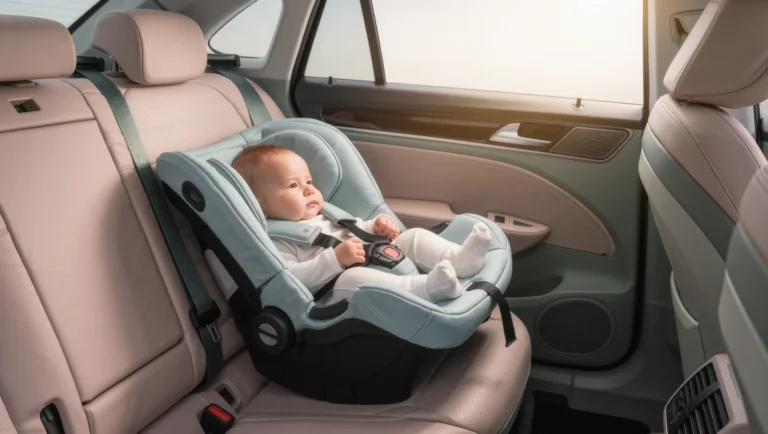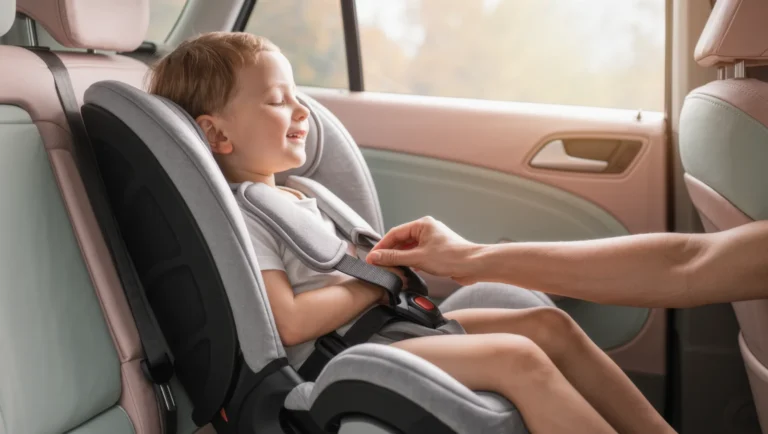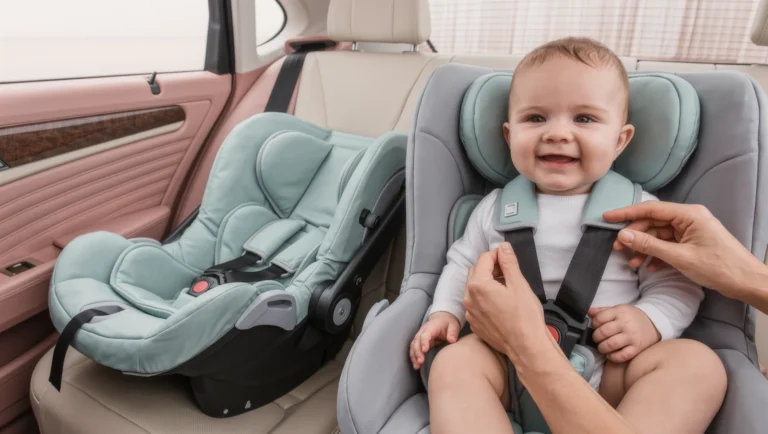


It’s Saturday morning, the sun is out, and your baby is lying in the pram carrycot staring at the sky with a look that says “right, clouds… anything else?” 😅 A toddler rolls past in a seat unit pointing at dogs, pigeons and bins, while yours gets a fine view of the hood. So you wonder: is it time for the seat?
If you’re not sure when the moment is right, that’s completely understandable. The manual says one thing, your friends another, the shop assistant something else. Don’t worry, it’s all fine: there are clear signs to go by, and we’ll walk through them together.
Why the carrycot (or a fully flat seat) comes first
A newborn doesn’t yet have the strength to hold their head and back upright for long. That’s why the NHS (the UK’s health service) says it plainly: pushchairs are only suitable for young babies if the seat reclines fully so your baby can lie flat. A carrycot is exactly that – a comfy, flat bed on wheels.
According to the NHS, your baby can sleep in the carrycot for the first few months. That’s what makes it so handy early on: a walk is often a nap too.
When is your baby ready for the seat unit?
The NHS rule of thumb is simple: wait until your baby can sit by themselves before using a pushchair with an upright seat. Skills matter more than birthdays.
- Steady head: your baby holds their head up without it flopping forward or to the side.
- Sitting with a little help, or alone: according to the CDC (the US Centers for Disease Control and Prevention), around 6 months many babies sit while leaning on their hands, and sitting without support is a milestone for around 9 months.
- Fits the harness: the shoulder straps sit comfortably without gaping.
- Growing curiosity: wriggling in the carrycot, trying to lift up, clearly wanting to see the world.
Many manufacturers give a guide age in the manual (often around 6 months). Check what yours says and combine it with what you see in your baby. If you’re wondering how sitting is going, have a look at when babies sit up on their own.
Read also3-in-1, 2-in-1 or lightweight pushchair: what’s the difference?How to choose a pushchair: the questions to ask yourself
Do a “test ride” at home: pop your baby in the seat, reclined, and watch for 10 minutes. If they slump to one side or their chin drops to their chest, it’s still too early for upright sitting. If they’re cooing happily and looking around the room – you’re nearly there. 👀
What if the seat reclines fully?
Many modern pushchairs have a seat that reclines to a lying position. According to the NHS, a pushchair like this is suitable for young babies, because your baby can lie flat. That means you can move to the seat earlier, but lying flat, and raise it gradually as your baby gets stronger.
- Flat first: seat fully back, baby on their back.
- Then semi-upright: once head and back are steady.
- Finally upright: once your baby sits alone.
If you’re still choosing a model, our comparison of 3-in-1, 2-in-1 and lightweight pushchairs will help.
What to check when you switch to the seat
The AAP (American Academy of Pediatrics) has some very practical stroller safety tips:
- 5-point harness: straps over both shoulders, the hips and between the legs – buckled on every ride, even for two blocks.
- Brakes: easy to use, on whenever you stop, and out of your child’s reach. A brake that locks two wheels gives an extra measure of safety.
- No bags on the handle: the weight can tip the pushchair backwards. Use the basket underneath instead.
- Little fingers: keep your baby clear when folding or unfolding, and check they can’t reach the wheels.
Don’t put the carrycot away straight away. For the first weeks on the seat, keep it handy for long walks and tired days. The switch can be gradual – nobody’s grading you. 🌿
What if they fall asleep in the seat?
It happens all the time – babies love dozing on the move. When your baby falls asleep in the seat, recline it as far as the model allows so their head can rest without dropping onto their chest. Check on them often, and don’t cover the pushchair with a muslin or blanket – air needs to flow freely. For what to wear on chilly days, see how to dress your baby for winter walks.
For dads
“Seat day” is a great job for you. Read the manual, adjust the straps to your baby’s height and test the brake and recline before you head out. Then take the first walk – you push, mum drinks her coffee while it’s still hot. ☕
When to ask your health visitor or doctor
If your baby still struggles to hold their head up, keeps leaning to one side, or anything about their sitting or movement worries you, mention it at your next check-up. Your doctor knows your baby and can calmly tell you whether things are moving along on your baby’s own timetable.
In short
The carrycot is the first nest; the seat is the first balcony onto the world. You switch when your baby is ready to sit – not when the calendar or the neighbour says so. You know your baby best, and very soon you’ll be pointing at pigeons together. 💛
Sources: NHS – What you will need for your baby; AAP / HealthyChildren.org – How to Buy a Safe Stroller; CDC – Milestones by 6 Months; CDC – Milestones by 9 Months.