

Most babies give their first real smile – in response to your face and voice – by the end of the second month, according to the AAP (American Academy of Pediatrics). Smiles in the first weeks are usually reflexes and fairly random. The social smile comes a little later, and every baby has their own pace.
It’s 4am. Your baby has just fed, you look down – and there it is: a smile! Your heart melts… and then you hear a very satisfied little toot. 😅
If you’re wondering whether that one “counts”, and when the real smile meant just for you will arrive – that’s completely understandable. Every parent waits for this moment. Relax, all is well: the smile comes when your baby is ready, and you’re already doing exactly the things that help it along.
When do babies start smiling?
The first social smile – when your baby smiles back at your face, voice or smile – usually appears by the end of the second month, according to the AAP. By then your baby is awake for longer, watches the faces around them and slowly learns that when they smile at you, you answer.
In the AAP’s milestones for around 2 months, a baby:
- calms down when spoken to or picked up;
- looks at your face and seems happy when you walk up;
- smiles when you talk to them or smile at them.
These are signposts, not an exam. Some babies are earlier, others a bit later. You’ll find more in our guide to baby development month by month.
What’s the difference between a reflex smile and a social smile?
A reflex smile shows up in the first weeks, often during sleep or after a feed, and isn’t aimed at anyone. The AAP describes it as a response to an internal signal, such as gas or hunger. A social smile is a response to you: your baby looks at you, hears your voice and smiles back.
| Reflex smile | Social smile | |
|---|---|---|
| When | first weeks | usually by the end of month two |
| What triggers it | internal sensations (gas, hunger) | your face, voice and smile |
| Aimed at | no one in particular | you and familiar people |
| What comes next | fades gradually | smile “conversations” and cooing |
When parents of a two-week-old tell one AAP pediatrician their baby is already smiling, she simply says: “Just wait, it gets even better.” 😊
Why does my baby smile past me instead of at me?
That’s normal. According to the AAP, some babies first smile at the lamp or the curtain, because looking straight into your eyes can feel like too much. Looking away gives them a sense of control, while they still take in your voice, your warmth and the way you hold them.
Read alsoFirst words: how speech developsWhen do babies start walking and how can you help?
Over time your baby holds your gaze for longer. Grandparents and familiar sitters often get a hesitant smile first, while strangers get a curious stare. It’s a sign your baby is starting to sort out who’s who.
How can I encourage my baby to smile?
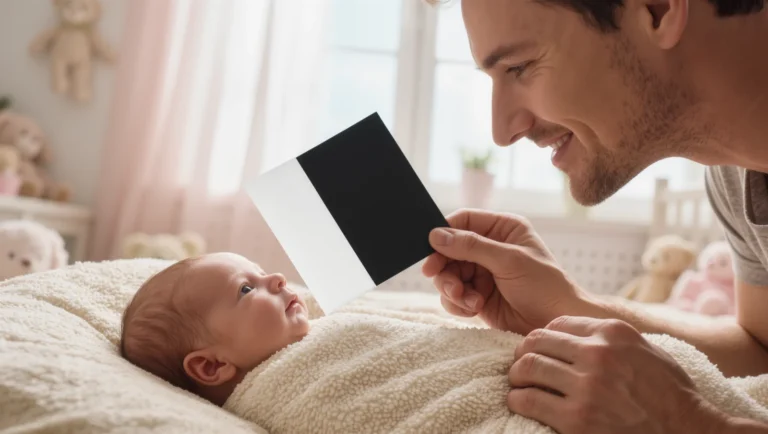
The best way is plenty of face-to-face time: talk, sing and respond to your baby’s sounds and expressions. The NHS (the UK’s health service) suggests talking and singing during feeds and nappy changes, because your baby loves watching your face and hearing your voice. No special toys needed.
- Get close: the NHS suggests being face to face when you talk and sing, so your baby can see your mouth.
- Use a sing-song voice: exaggerated ups and downs help your baby follow the movements of your mouth.
- Pause: smile and wait. Early “conversations” are slow.
- Answer back: when your baby makes a sound or smiles, respond with words or a smile. The NHS calls this the start of your conversations.
- Play copycat: stick out your tongue or blink and see if your baby copies you.
- Respect the breaks: if your baby turns away, they need a rest. The AAP notes that responding to their cues for play and for breaks shows them their feelings matter.
Use the “boring” moments. A nappy change is the perfect stage: baby on their back, your face right above, and an audience with nowhere to go. Narrate what you’re doing – “socks off, legs up” – and wait for the applause in the form of a gummy grin. 👏
More ideas for this age are in our guide to play with a newborn (0–3 months).
When do babies start laughing?
Giggles usually follow the smile. In the AAP’s milestones for around 4 months, a baby smiles on their own to get your attention and chuckles (not yet a full laugh) when you try to make them laugh. The proper belly laugh comes a little later.
Around 3–4 months many babies also become fascinated by other children. If there’s an older brother or sister, you’ll see your baby beam when they chat to them.
What if my baby was born early?
For premature babies, the AAP suggests using corrected age for milestones during the first 2 years: take your baby’s age and subtract the weeks they arrived early. A baby born at 32 weeks who is now 4 months old has a corrected age of 2 months – just the time they may start to smile.
Save your baby’s corrected age in your phone. When a well-meaning relative asks “Isn’t she smiling yet?”, you’ll have a calm answer ready. 😉
For dads
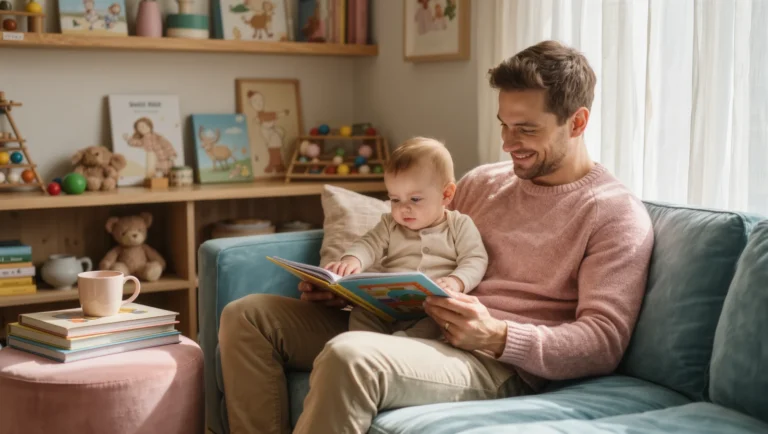
Babies smile at the face they see often and that answers them. Take a “face-to-face shift”: the nappy change after the evening feed, telling your baby about your day while you hold them, the same little song every night. Babies adore repetition, and that first smile aimed at you is worth every off-key round of “Twinkle, Twinkle”.
When should I talk to my doctor?
Mention it to your doctor or health visitor if, at around 3 months (corrected age for premature babies), your baby still doesn’t smile when you talk or smile at them, or rarely looks at faces. It isn’t a diagnosis – just a reason for a calm conversation.
Ask too if your baby has stopped doing something they could already do, or if you simply feel something isn’t right. Your doctor knows your baby and will judge whether more is needed or just a little patience. Find more milestones in our Development & Play section.
In short
The first real smile usually arrives by the end of the second month, while early “smiles” in sleep are a sweet but random reflex. Face-to-face time, your voice and a little patience are all it takes to coax it out. And when it comes, you’ll feel every sleepless night has finally been answered. 💛
Sources: AAP / HealthyChildren.org – When do babies first smile?; AAP / HealthyChildren.org – Emotional and Social Development: Birth to 3 Months; AAP / HealthyChildren.org – Developmental Milestones: 3 Months; AAP / HealthyChildren.org – Corrected Age for Preemies; NHS Best Start in Life – Baby's first sounds: 0 to 6 months.