

This guide may contain affiliate links. If you buy through them, we may earn a small commission at no extra cost to you. Learn more
First steps are one of those moments when your phone is always in the other room. Some babies set off before their first birthday; others decide they’re perfectly happy on all fours for a bit longer. Both are completely fine.
Every child has their own walking clock. Your role is to give them space, time and a sense of security – and the steps will come.
When do babies usually start walking?
Walking comes gradually, in small stages. According to the updated guidelines from the US Centers for Disease Control and Prevention (CDC), which show what at least 75% of children do by a given age:
- By 12 months most children pull themselves up to standing and cruise along holding on to furniture.
- By 15 months they take a few steps on their own.
- By 18 months they walk without holding on to anything.
On average, lots of babies take their first independent steps around their first birthday, but experts at Cleveland Clinic point out that 17–18 months is also within the normal range. A wide range – and that’s on purpose.
How can you help?
Walking isn’t “taught” with exercises and can’t be rushed. But you can set up good conditions for it:
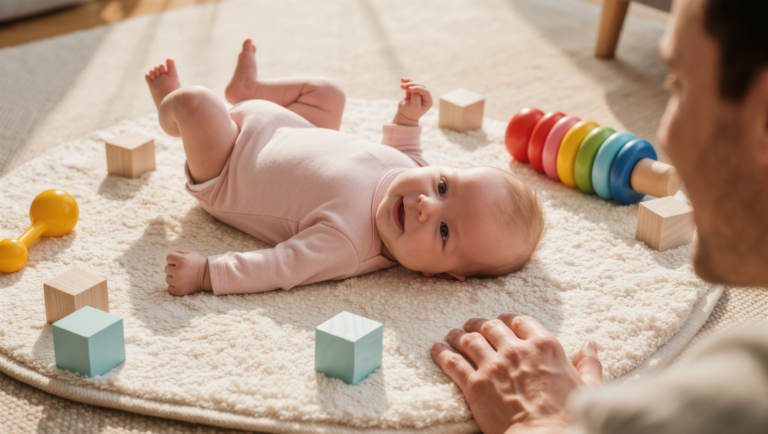
- Lots of floor time. That’s where your baby builds strength, balance and confidence.
- Sturdy supports. A low sofa or a heavy coffee table that won’t tip over make an excellent “runway” for cruising.
- An interesting goal. A favourite toy, or your open arms a couple of little steps away.
- A safe space. Secure the stairs, sharp corners and wobbly furniture – and let landing on their bottom be part of the game.
When your baby plops down on their bottom, the first thing they do is look at you. If they hear a calm “Oops! Let’s try again”, they often just get back up and carry on. Your calm reaction is their courage. 😊
What about baby walkers?
Here the position is clear. The American Academy of Pediatrics (AAP) doesn’t recommend baby walkers on wheels and has even called for a ban on making and selling them. There are two reasons:
- Safety. In a walker, a baby moves much faster than they can react – and reaches stairs, hot surfaces and objects they otherwise couldn’t. A study published by the AAP in 2018 reported over 9,000 walker-related injuries a year in the US alone.
- They don’t help with walking. According to the AAP, they may even delay independent walking, because the baby doesn’t train balance and muscles the way they do when moving freely.
If you’ve already used a walker – there’s no need to feel guilty. Just start from here. The alternatives the AAP suggests are stationary activity centres (no wheels) and a safe, fenced-off play area. A simple, sturdy push-along toy that your child holds on to by themselves is another option – as long as it’s heavy, won’t tip over and you’re close by.
Shoes – when?
At home, on a safe surface, many children are happy in non-slip socks. Shoes become important outdoors – for protection from cold and uneven ground. Choose light, flexible ones with room for the toes.
If you hold your baby’s hands so they can “walk”, do it briefly and keep your hands low – just above their shoulders, not high above their head. That’s more natural for their shoulders and easier on your back.
For the dads
The “come to Daddy” game is a classic for a reason. Sit on the floor a step away, open your arms and greet every step with the enthusiasm of a sports commentator. Then swap places with mum – and there’s your team.
When to talk to your paediatrician
Ask for their view if your child isn’t walking on their own by 18 months, if they lose a skill they already had, or if you notice that one leg moves or looks different from the other. Don’t wait for the next check-up if something worries you – these are exactly the kinds of questions paediatricians are there for.
In short
First steps don’t arrive on a timetable – and that’s part of their charm. Give your little one floor space, a safe environment and your open arms. When they’re ready, they’ll set off – and you’ll be there to catch them. 👣
Sources: CDC – Milestones in Action: By 18 Months; American Academy of Pediatrics (HealthyChildren.org) – Baby Walkers: A Dangerous Choice; Cleveland Clinic – When Do Babies Start Walking?.
More from this section


Your baby, week by week
Once a week: what's coming up, one useful tip and nothing extra.
