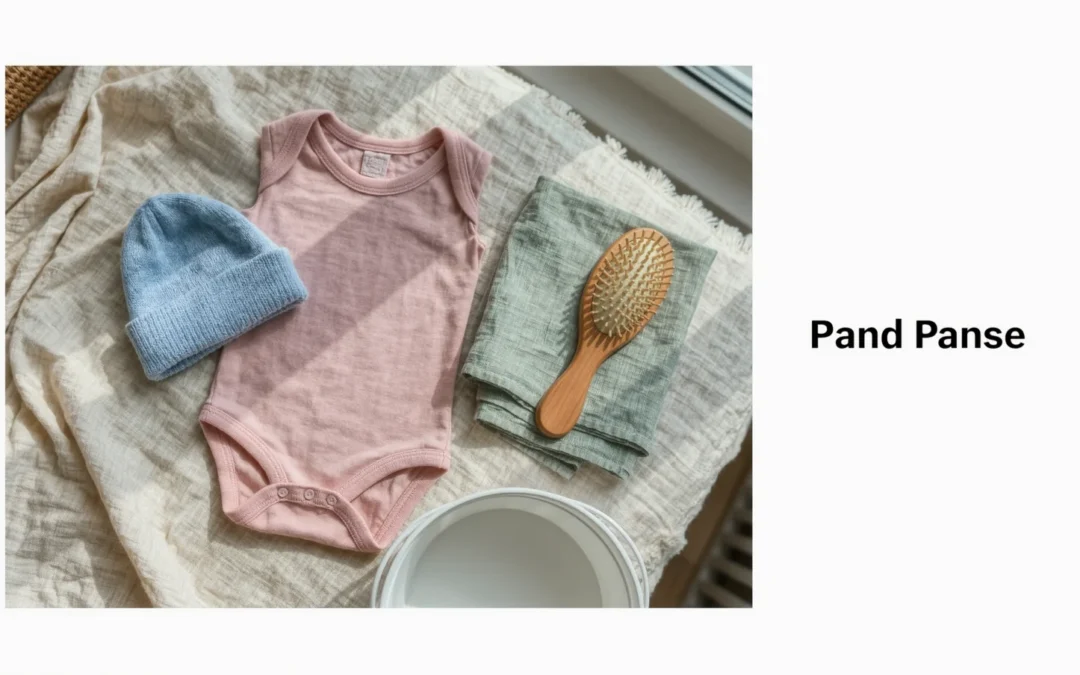
You are standing in front of a shelf with a thousand pastel things, holding a list as long as a train timetable. Wipe warmers, a cloud-shaped night light, tiny shoes for a baby who has not been anywhere yet. 😅
If you feel lost about what is really needed, that is completely understandable. Shops have an interest in telling you “everything”. The good news is that the NHS says something much calmer: you do not need everything from day one. Start with the essentials and add the rest as you find out what you are missing.
What should be new, and what can be second-hand?
According to the NHS, not everything has to be brand new, with two exceptions: the cot mattress and the car seat. Clothes, toys and most small things can happily come from a friend or a nearly-new sale. Your baby will wear them for a few weeks, so this is an easy budget win.
What do you need for sleep?
Here is the basics from the NHS list:
- A place to sleep: a portable crib, a carrycot or a Moses basket.
- A mattress: firm, flat, fitting snugly with no gaps, plus a waterproof cover.
- Bedding: at least 4 fitted sheets and 2 sleeping bags (or sheets and a cellular blanket).
The same official advice is clear about what does NOT belong in the cot: pillows, duvets, cot bumpers, loose blankets, soft toys, and “pods” or “nests” that keep the baby in place. Babies sleep on their backs (for naps too, says the AAP, the American Academy of Pediatrics), and the room sits at about 16 to 20 °C. More on mattresses in Cot and mattress and on sleeping bags in Baby sleeping bags.
The cot is the most boring spot in the house, and that is exactly right. Empty, flat, no decorations. Leave the pretty nests and bumpers to the photos online. 😊
What about nappies, bath time and clothes?
The NHS suggests sensible amounts, not a warehouse:
- Changing: a few packs of newborn nappies (or reusable cloth ones), cotton wool or gentle unscented, alcohol-free wipes, a changing mat or towel.
- Clothes: at least 6 all-in-one sleepsuits, 4 to 6 vests or bodysuits with poppers, 2 cardigans (wool or cotton rather than nylon), scratch mittens, socks and a hat for the season.
- Bathing: a baby bath or a clean washing-up bowl, and towels.
For nappies, see our nappy guide. And if it is cold and you are eyeing a puffy snowsuit, read first how to keep warm in a car seat without the risk: Winter coats in the car seat.
Breastfeeding, formula or both?
Every one of these paths is perfectly fine, and the choice belongs to your family together with your midwife or doctor. So there is no need to buy it all in advance. For orientation, the NHS lists:
- If you breastfeed: nursing bras (try to get measured around 36 to 38 weeks), breast pads, a breast pump if you wish, and muslin squares.
- If you use formula: bottles with teats and caps, sterilising equipment, brushes, formula powder or ready-to-feed liquid, and muslin squares.
More on this in the Feeding category.
What do you need out and about?
- A rear-facing infant car seat (new, not second-hand). More in Car seats: i-Size explained simply.
- A pushchair with a fully reclining seat, so your baby can lie flat.
- A blanket or shawl and a bag for nappies and bits and bobs.
If you are thinking about a sling or carrier, the NHS advises reading the safety advice first. A handy rule is “TICKS”: Tight, In view at all times, Close enough to kiss, Keep chin off the chest, Supported back. And do not feed your baby while they are in the sling. See also the Travel and gear category.
A pushchair is not a competition. Try it in the shop: does it fold with one hand, does it fit in your boot? The best pushchair is the one you do not resent at 7 in the morning. 🌿
What can you happily put off?
Notice what is missing from the NHS list: wipe warmers, tiny shoes, pretty cot bumpers and nests. Some of those are not just optional, since the advice is not to use bumpers, pillows or pods in the cot at all. Everything else you will figure out after two weeks at home, and then you can shop calmly.
For dads
Split the list like a project. Dad can take the car seat (try fitting it in the car before the birth, not on discharge day), the cot assembly and the room thermometer. It is a small job for him and a big relief for a tired mum.
When to ask the midwife or paediatrician?
If you are unsure about anything to do with feeding, sleep or your baby’s health, ask your midwife, health visitor or paediatrician. They know your baby and your family, and an internet list does not.
In short
The newborn list is shorter than the shop windows suggest: a safe cot, a new car seat, warm layers, something for feeding and two calm hands. The rest arrives with time, like guests who are welcome but not required. You are doing better than you think. 💛
Sources: NHS – What to buy for your newborn baby; NHS – Sudden infant death syndrome (SIDS); AAP – How to Keep Your Sleeping Baby Safe.
More from this section

Your baby, week by week
Once a week: what's coming up, one useful tip and nothing extra.