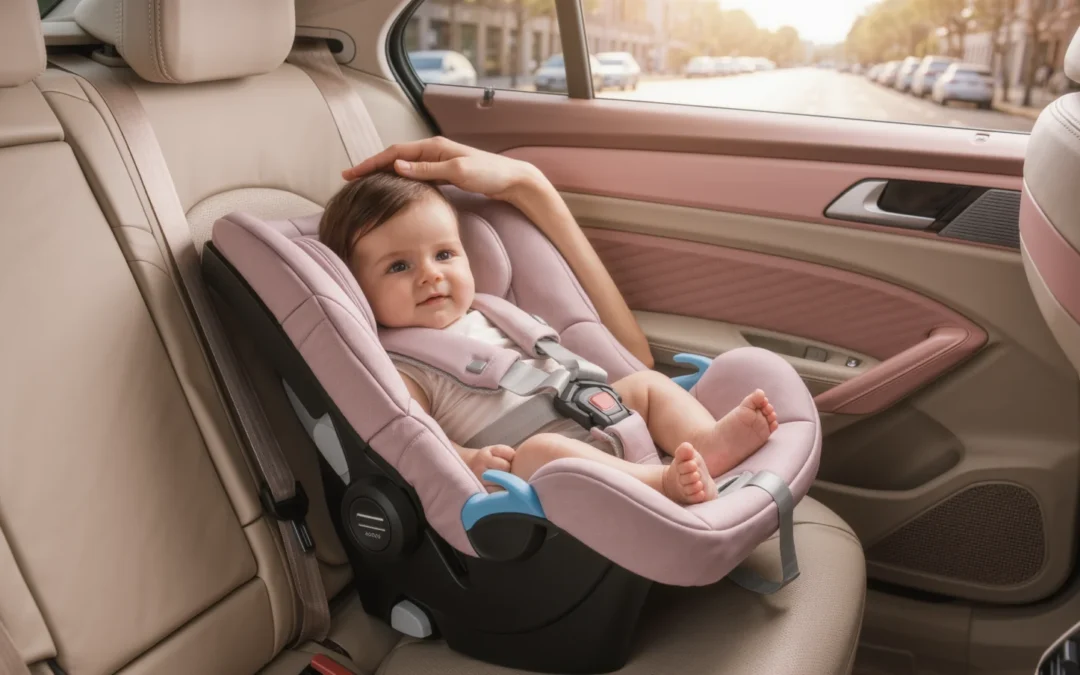
R129, i-Size, ISOFIX, R44… If it sounds like a safe combination to you, you’re not alone. The nice thing is that behind these letters there’s some pretty simple logic. Let’s untangle it step by step.
You don’t need to become a car safety expert. Knowing a few things is enough – and you’ll already be asking the better questions in the shop.
The short answer: R129 is the European car seat standard, and i-Size seats under it use ISOFIX and are chosen by your child’s height. It requires rear-facing until at least 15 months. New R44 seats can no longer be sold in the EU, but you can keep using one in good condition that has never been in a crash.
What is R129 and what is i-Size?
R129 is the European (strictly speaking, UNECE) standard for child car seats – in other words, the rules a car seat is tested and approved against. i-Size is part of R129: these are seats fitted with ISOFIX and chosen according to your child’s height rather than their weight.
Why height? Because it’s easier to check whether your child “fits” the seat – you measure them and compare with the range printed in centimetres on the label.
And what is ISOFIX?
ISOFIX means two metal anchor points in the car, tucked between the backrest and the seat cushion of the back seat. The car seat (or its base) clicks directly onto them. That makes it harder to fit it wrongly than with the car’s seat belt alone.
Most infant i-Size seats also have a third anchor point – a support leg that rests on the car floor, or a top tether that hooks behind the backrest. These stop the seat rotating forwards under sudden braking.
Why rear-facing?
For the youngest children, R129 requires the seat to be rear-facing until at least 15 months of age. The reason is simple: a baby’s head is big and heavy compared with their body, and their neck is still weak. When they’re facing backwards, in a crash the seat back takes the force across the whole of their back.
The American Academy of Pediatrics (AAP) goes even further: it advises keeping children rear-facing for as long as possible – until they reach the maximum height or weight set by the seat’s manufacturer. Many modern seats allow this up to around 4 years of age.
Don’t rush to turn the seat forward-facing just because your child’s legs touch the backrest. Kids sit happily with their legs bent or crossed. Go by the label on the seat, not by how old your cousin’s child was. 😉
Can I still use an R44 seat?
Since 1 September 2024, new seats approved under the old R44 standard can no longer be sold in the EU. The ban covers sales, not use – if you have an R44 seat in good condition, that has never been in a crash and is within the manufacturer’s stated lifespan, you can keep using it. Next time you buy, though, the choice will be R129.
What to check before you buy
- Is it right for your child’s height now – and how far will it take them?
- Does your car have ISOFIX, and is it on the seat manufacturer’s vehicle compatibility list? Not every i-Size seat fits every car.
- How easy is it to fit? Ask to try it in your own car.
- How did it do in independent tests? The German automobile club ADAC, together with Stiftung Warentest, tests car seats twice a year – crash tests, ease of use, harmful substances. The results show there are real differences between approved models, so it’s worth a look.
Where in the car?
The safest place for the car seat is the back seat. A rear-facing seat must never go in front of an active airbag. If it has to go in the front, the airbag must be able to be switched off – check your car’s handbook.
The pinch test: once you’ve buckled the seat’s harness, try to pinch the strap at collarbone level between two fingers. If you can grab a fold – tighten it some more.
For the dads
The car seat is often “your” project – and that’s great. Read the manual once from start to finish (yes, really). Fit the seat before the birth, so you’re not doing it for the first time in the hospital car park. And don’t hesitate to ask for help in the shop – good assistants will show you how to fit it in your own car.
What matters most to you?
If you often swap cars – think about a seat that’s easy to fit. If you want your child rear-facing for longer – look at models with a higher height limit. If your budget is tight – it doesn’t need to be expensive; it needs to be R129, fitted correctly and right for your child. The decision is yours.
In short
R129 means newer tests, i-Size means choosing by height plus ISOFIX, and rear-facing means for as long as you can. You now know more than most people in the shop queue. Trust this information and your own judgement – you’re doing brilliantly. 🚗
Sources: Which? – i-Size child car seats explained; Halfords – What is the R129 child car seat safety standard?; Children’s Hospital of Philadelphia – AAP Child Passenger Safety Recommendations; Motor1 – ADAC Kindersitztest Herbst 2025.
More from this section


Your baby, week by week
Once a week: what's coming up, one useful tip and nothing extra.