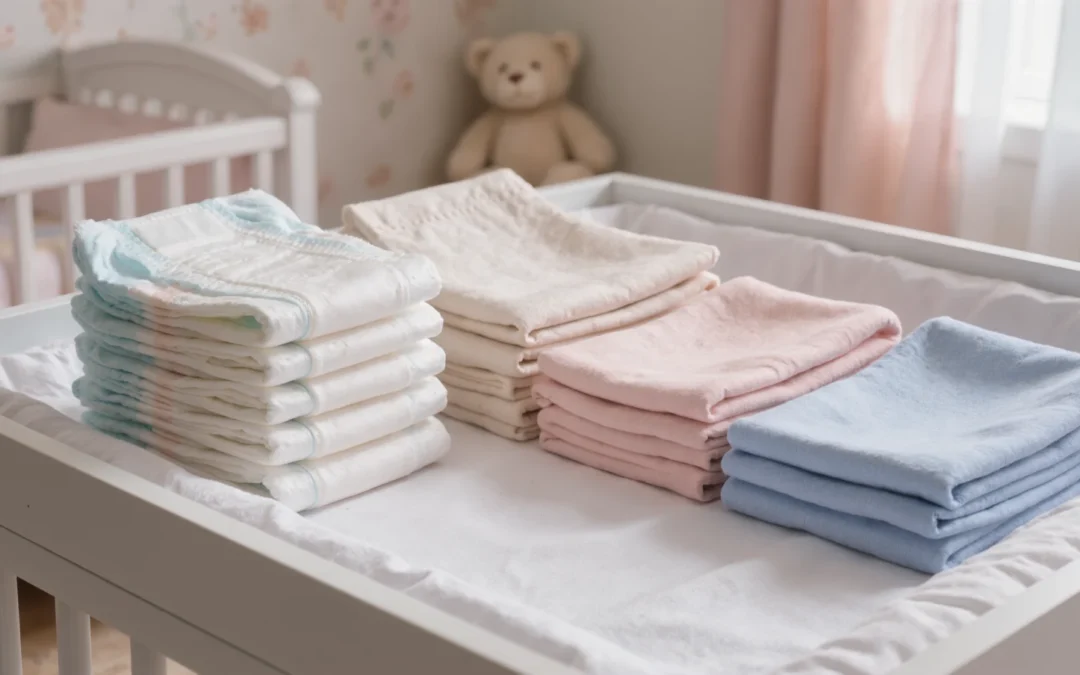
A whole shelf of nappies, dozens of packs, and every one says “driest”, “gentlest”, “up to 12 hours”. And all you want is for your baby to stay dry, their skin to stay calm, and not to throw away half a pack because it didn’t fit. 🙂
The good news is that nappies aren’t an exam with one right answer. Most babies get on fine with all sorts of brands. Here’s what actually makes a difference.
The short answer: Size goes by weight, and it matters more than brand: leaks often mean it’s time for the next size. Expect about 10–12 changes a day at first and 6–8 later. Disposable or reusable is your call, as a UK assessment found no significant overall environmental difference.
Size matters more than brand
Sizes go by your baby’s weight, not their age. Two three-month-olds can easily wear different sizes. Signs that a nappy is too small or too big:
- It leaks up the back or around the legs – often it’s time for the next size.
- It leaves red marks on the tummy or thighs – it’s too tight.
- It gapes around the legs – it may be too big.
Buy a small pack first and try it before you fill the cupboard. Babies grow fast, and big stocks of newborn nappies often end up going spare.
When you fasten the nappy, run a finger round the leg cuffs and pull the frills outwards. If they’re tucked in, the nappy leaks more easily – even when the size is spot on.
How often should you change it?
According to the NHS, the UK’s health service, at first your baby may need changing about 10–12 times a day, and later about 6–8 times. So absorbency matters, but changing often matters even more. No nappy beats clean, dry skin.
What about the skin?
When skin is in contact with wee and poo for a long time, nappy rash can appear – redness in the nappy area. The NHS advises:
- change nappies often;
- let your baby go nappy-free for a little while when you can;
- clean with water or with fragrance-free, alcohol-free wipes;
- avoid soaps and talc in that area.
If you get the feeling a particular nappy irritates the skin, simply try a different one. If the redness doesn’t go away, gets worse or spreads – show it to your paediatrician.
Disposable or reusable?
There’s no “right team” here. Here are the pros and cons in brief:
- Disposable: convenient, quick, with gel that locks in moisture. Downside – more waste and an ongoing cost.
- Reusable (cloth): less waste, and they can be used again for a next child. Downside – washing, drying, more organising. The NHS advises using dry liners with them and changing them often.
And the environment? An assessment by the UK Environment Agency (2005) found no significant difference in overall impact between the two types. Its later update shows that with reusables, a lot depends on how you wash and dry them – a full machine, a lower temperature and air-drying make a difference.
What matters more to you: convenience, the budget over time, or less waste? Lots of families mix and match – cloth at home, disposables when out and about and at night.
Nappies labelled “eco” or “bio” aren’t necessarily better for the skin. If this matters to you, look at exactly what the manufacturer claims and whether there’s an independent certification – not just green packaging. 🌿
For the dads
Changing nappies is one of the easiest ways to be part of your baby’s everyday life from day one. After a dozen or so changes, you’ll be faster than any advert.
In short
The right size, frequent changes and keeping an eye on the skin tell you more than any promise on the pack. Try, compare and choose what works for your baby and your routine. You already know your child better than any label does.
Sources: NHS Best Start in Life – Changing a nappy; NHS – Nappy rash; Environment Agency (GOV.UK) – An updated lifecycle assessment for disposable and reusable nappies; Environment Agency (GOV.UK) – Disposable and reusable nappies in the UK: life cycle assessment.
More from this section
Your baby, week by week
Once a week: what's coming up, one useful tip and nothing extra.