
This guide may contain affiliate links. If you buy through them, we may earn a small commission at no extra cost to you. Learn more
You open yet another “baby checklist” and it’s as long as a mortgage contract. Wipe warmers, dummy dryers, night-light projectors with ten tunes… And a little wave of panic: what if something important is missing? 📋
The truth is simpler than the adverts. A newborn needs warmth, food, a clean nappy, a safe place to sleep – and you. Everything else can be bought later.
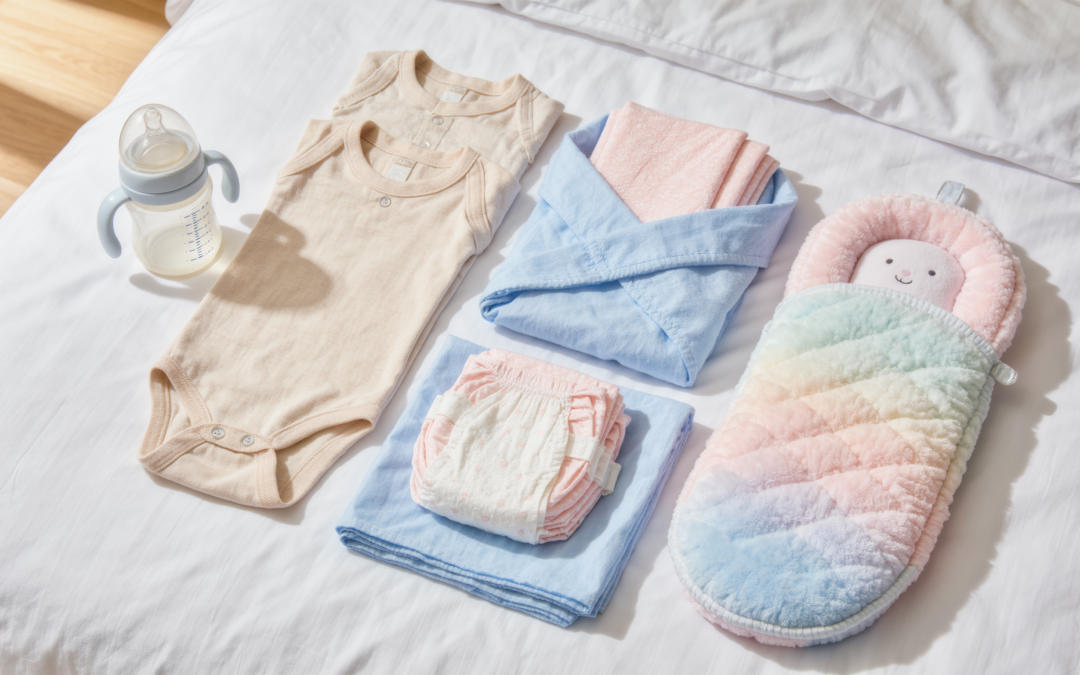
The short answer: The core is a safe place to sleep with a firm, flat mattress, nappies, a few clothes, a baby bath and a way to feed, plus a rear-facing car seat if you’ll travel by car. You can skip cot bumpers, pillows and duvets.
What do you really need from day one?
The list below follows guidance from the NHS, the UK’s health service.
For sleep
- A cot, Moses basket or crib with a firm, flat mattress.
- A waterproof mattress protector and a few fitted sheets.
For nappy changes
- A few packs of newborn nappies.
- Cotton wool or gentle wipes, a changing mat and a barrier cream.
Clothes
- At least six sleepsuits and four to six bodysuits.
- Cardigans, hats and socks – depending on the season.
For bath time and outings
- A baby bath and towels.
- A rear-facing car seat (if you’ll be travelling by car) and a pram that lies fully flat.
For feeding
- If you’re breastfeeding – the list is short. If you’re formula feeding – you’ll need bottles, a way to sterilise them, and the formula itself.
The NHS points out that the cot mattress and the car seat are the things that really should be new. For most other things – clothes, the baby bath, toys – second-hand is a perfectly good idea. And a good saving.
What can wait?
These things aren’t “bad”. They’re just not urgent, and many families never use them:
- a high chair – not needed until around 6 months;
- wipe warmers, special nappy bins and other “conveniences” – nice, but optional;
- whole ranges of toiletries – in the first weeks you need very few products;
- lots of newborn-size clothes – they’re often outgrown within weeks.
What it’s best to skip
The Lullaby Trust doesn’t recommend cot bumpers, sleep positioners, soft “nests”, pillows or duvets in a baby’s sleep space. The NHS also advises no duvets or pillows in the cot. So you can happily cross a whole line off the list – and save money. 😌
How to make your own list
Every home is different. Think about:
- How will you feed your baby? The whole kitchen section depends on that.
- How much space do you have? If it’s tight → look for foldable and multi-purpose options.
- Is there anyone who can lend you things? Family and friends with older children are often a gold mine.
Keep a “later” list – for things you’ll decide on after the birth. Online delivery is quick, and after a week with your baby you’ll know far better what you really need.
For the dads
Two jobs that often get left until the last minute: fitting the car seat and assembling the cot. Do them a few weeks before the due date – and try the car seat at least once in a calm car park, not the hospital one.
In short
A safe place to sleep, nappies, a few clothes, a baby bath and a way to feed – that’s the core. Everything else gets added according to your needs. Your baby won’t notice the lack of a ten-tune night-light projector – they want you. And you’re already ready for that. 💛
Sources: NHS Best Start in Life – What to buy for your newborn baby; The Lullaby Trust – A guide to buying safer sleep essentials (PDF); The Lullaby Trust – Caution around potentially unsafe baby sleep products.
More from this section


Your baby, week by week
Once a week: what's coming up, one useful tip and nothing extra.
