

Grandma is adamant: “Pop him in the walker, he’ll learn faster!” Your mother-in-law nods, the neighbour has a photo of her grandchild zooming across the living room, and you are left wondering whether you missed something. 😅 Relax, it makes total sense that it sounds true.
A walker does not teach a baby to walk. According to the AAP (American Academy of Pediatrics), it can even delay first steps.
Where does this myth come from?
The idea is easy to follow: the baby is upright, the legs are moving and the baby looks delighted. Generations of parents saw exactly that and reasonably concluded that the walker “trains” walking. It comes from care and the wish to support the baby, not from bad intentions.
What does the science say?
The AAP says walkers do not help children learn to walk and “can actually delay” when a child starts. The Australian government health site Pregnancy, Birth and Baby agrees: babies learn balance, crawling and weight-bearing through floor time, and a walker takes some of those chances away.
Read alsoWhen do babies start walking and how can you help?Myth or truth: “A baby shouldn’t go outside before day 40”?
The second part is safety. According to the AAP, a baby in a walker can move more than three feet in a second, so most injuries happen even when an adult is nearby, most often falls down stairs. The AAP has called for a ban on walkers with wheels, and Canada has already banned them. Stationary activity centres (no wheels) are described as a safer alternative.
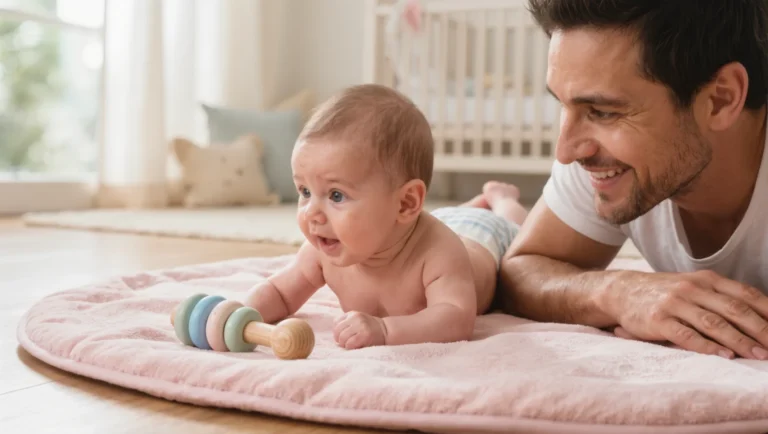
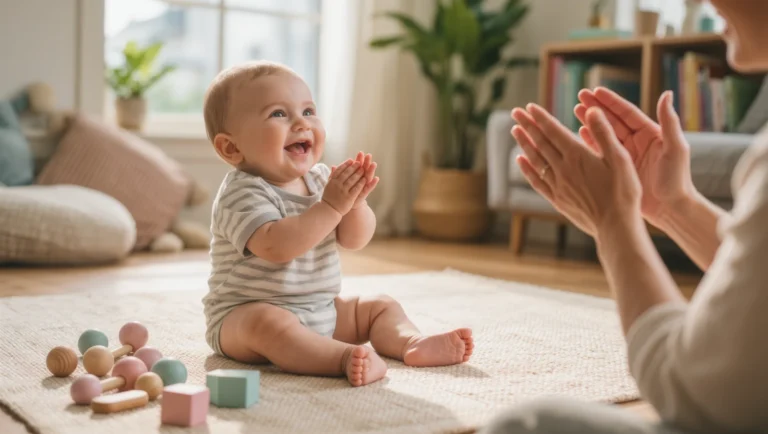
The best “training” is the floor. Spread out a blanket, put a favourite toy just out of reach and let your baby chase it. When it is reached, applause! 👏
What can you do instead?
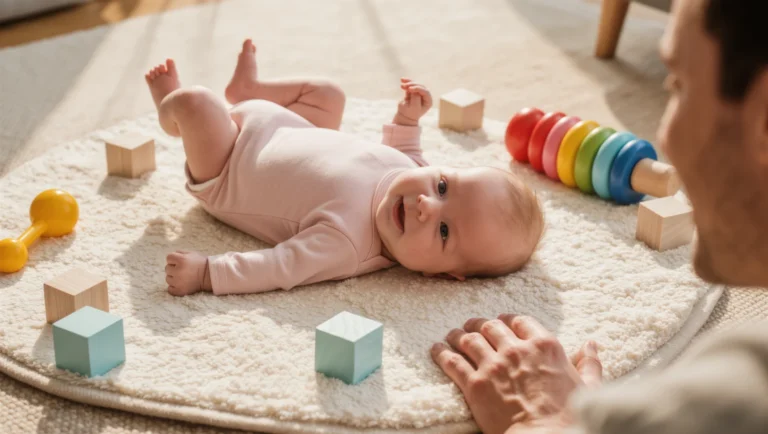
- More floor time: tummy time, rolling, crawling and squatting are the real preparation for walking.
- Safe support: low, stable furniture your baby can pull up on and cruise along.
- A play area: a playpen or fenced-off corner for when you need your hands free. No guilt, you need that too.
- Relax about the schedule: every baby walks in their own time and the range is wide. If you are worried, ask your paediatrician, who knows your baby.
Read more: When do babies start walking and how can you help? and Tummy time: why it matters and how to make it fun.
In short
Babies do not learn to walk from a gadget but from hundreds of little falls, pull-ups and tries on the floor. Your job is a safe space and applause for every step when it comes. 💛
Sources: AAP (HealthyChildren.org) – Baby Walkers: A Dangerous Choice; Pregnancy, Birth and Baby (Australian Government) – Baby walkers.