

According to the NHS (the UK’s health service) and the WHO (World Health Organization), babies don’t need any added salt or sugar – not when you start solids, and not in the early years either. Fruit is fine, but salt, sugar, honey and syrups can wait. The flavour comes from the food itself. 🌿
Sunday lunch. Grandma has made soup, it smells amazing, and someone at the table is already saying: “Oh, give the little one a spoonful, a pinch of salt never hurt anyone.” You’re holding the spoon and hesitating.
If you’re wondering whether you’re being overly cautious – that’s completely understandable. There’s so much advice around weaning that it’s easy to get lost. The good news is that here the official guidance is refreshingly clear and simple. Nothing to worry about.
When can babies have salt?
The NHS advises not adding salt to your baby’s food or to the water you cook it in – right from the very first spoonful of solids. The reason is that a baby’s kidneys aren’t fully developed yet and can’t cope with much salt. There’s no magic “salt age” – even for older children the amount stays small.
This includes hidden salt too: the NHS specifically mentions stock cubes and gravy, as they’re often high in salt. If you’re cooking one meal for the whole family, set the baby’s portion aside before you season.
How much salt is too much for a baby or toddler?
The NHS gives maximum daily guides for all salt eaten in a day – both what’s already in food and what’s added. For babies under 1 year the limit is less than 1g a day, and that amount is easily reached from the natural salt in foods alone. So added salt simply has no place on the plate.
| Age | Maximum salt per day (NHS) |
|---|---|
| Under 1 year | less than 1g |
| 1–3 years | no more than 2g |
| 4–6 years | no more than 3g |
| 7–10 years | no more than 5g |
| 11 years and over | no more than 6g (about 1 teaspoon) |
You don’t need to weigh grams like a lab technician. The table just shows how little a small body actually needs.
Can babies have sugar and sweet foods?
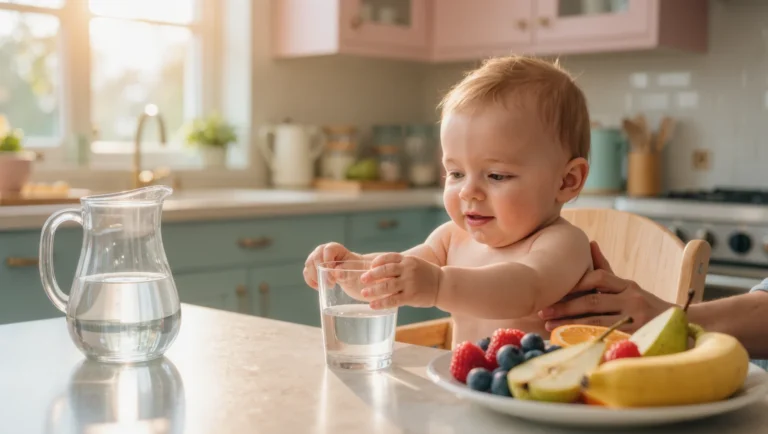
According to the NHS, your baby doesn’t need sugar or sweeteners. For children aged 4 or younger, the NHS advises avoiding food and drinks with added sugar or sweeteners – including the “natural” sugar in honey, syrup, fruit juice and smoothies. Whole fruit itself is absolutely fine.
The WHO says the same in its 2023 guideline on complementary feeding for children aged 6–23 months: babies and young children shouldn’t have foods and drinks high in sugar, salt and trans fats, or non-sugar sweeteners, and fruit juice should be limited. The AAP (American Academy of Pediatrics) recommends no fruit juice at all for babies under 12 months – it offers no nutritional benefit at this age, can raise the risk of tooth decay and can build a preference for sweeter flavours over plain water.
Read alsoWhen can babies have honey? Why it waits until age 1When can babies drink cow’s milk? Calm, clear guidance
Honey is a separate story – it’s not given before age 1 for a completely different reason. We cover it in detail in When can babies have honey? Why it waits until age 1.
Sweetness doesn’t have to come from the sugar bowl. Ripe banana, baked apple or pear, sweet potato and carrot make a purée naturally sweet. Your baby has no idea what chocolate is – to them, baked apple is a five-star dessert. 😊
Which foods hide the most salt and sugar?
Most salt and sugar doesn’t come from the shaker – it comes from ready-made foods. The NHS lists salty foods to avoid for babies: bacon, sausages, chips with added salt, crackers, crisps, ready meals and takeaways. Add stock cubes and sauces to that list.
- Salty: cured meats, bacon, sausages, crackers, salty snacks, ready meals, takeaways, stock cubes, sauces.
- Sweet: juices and smoothies, syrups, honey, biscuits, cakes, sweetened yoghurts and drinks.
- Fine: fresh, frozen or baked fruit and vegetables cooked at home without salt or sugar.
The label is your friend. Packaging in the EU and UK shows salt per 100g. Compare two pots on the shelf – sometimes the difference is surprising. If a baby food says “no added sugar”, check further down the ingredients for syrup or concentrated juice.
How do you make baby food tasty without salt or sugar?
Flavour comes from the ingredients themselves and from how you cook them. Roasting, steaming and pairing sweeter vegetables with milder ones make food interesting without any salt. The NHS reminds parents that it can take 10 tries or more for a baby to get used to a new taste – that’s perfectly normal.
- Set the baby’s portion aside from the family meal before seasoning.
- Try gentle herbs – dill, parsley, basil, a little garlic or onion.
- Roast instead of boiling – roasted vegetables turn sweeter and more aromatic.
- Combine – squash with apple, broccoli with potato, carrots with lentils.
- Offer it again – if your baby pulls a face, try again in a few days.
If you’re just getting started, see Starting Solids: When and How to Begin and everything in Baby Feeding.
What if my baby has already had something salty or sweet?
Relax, everything’s fine. A bite of birthday cake or a spoonful of grandma’s soup isn’t a failure. The guidance is about what your baby eats day to day, not about a one-off. What matters is that everyday food is simple, home-made and free of added salt and sugar.
Many families find they end up salting less themselves. An unexpected bonus for the whole table.
For dads
If you’re the Saturday cook, you’re also the keeper of the salt shaker. Serve the baby’s portion first, then season for the grown-ups. And when a relative offers “just one biscuit”, you can calmly say “thanks, we’ll give them some apple” – so mum doesn’t always have to be the strict one.
When should you ask your paediatrician?
If your baby is on a special diet, has allergies, is growing more slowly or eats only a very few foods, talk the menu through with your paediatrician or health visitor. They can help you plan varied meals that fit your baby’s needs. Talk to your paediatrician before changing anything in your child’s special diet. They know your baby best.
In short
Your baby doesn’t need salt or sugar – their sense of taste is only just forming, and you’re showing them how delicious real food is. Baked apple instead of a biscuit, dill instead of a stock cube. You don’t need to be perfect, just consistent – and you already are. 💛
This information is based on the NHS, the WHO (complementary feeding guideline, 2023) and the AAP – links are in the sources below.
Sources: NHS – Foods to avoid giving babies and young children; NHS – Salt in your diet (maximum salt intake by age); NHS – Your baby's first solid foods; WHO – Guideline for complementary feeding of infants and young children 6–23 months of age (2023); AAP / HealthyChildren.org – Where We Stand: Fruit Juice for Children.