

Babies don’t need fruit juice in their first year. The AAP (American Academy of Pediatrics) advises no juice before 12 months, and the NHS (the UK’s health service) says babies don’t need it. The best drinks for a baby are breast milk or formula, plus a little water from around 6 months.
Sunday lunch at Grandma’s. The baby is in the high chair and Grandma is already pouring “just a little juice, it’s made from fruit, it’s healthy”. 🍎 You hesitate: should you say something, or is that over the top?
If you feel confused, that’s completely understandable. Not long ago juice was seen as a healthy baby drink, and many people still believe it. Relax, it’s all fine: the rules are simple and you’ll have them in a few lines.
When can babies drink juice?
According to the AAP, juice shouldn’t be given to babies under 12 months because it offers no nutritional benefit, can raise the risk of tooth decay and can build a preference for sweet tastes instead of plain water. After the first year juice still isn’t necessary – whole fruit remains the better choice.
The NHS is a little more flexible: babies under 12 months don’t need juice or smoothies, but if you do decide to give some, the NHS suggests diluting it well with water and offering it only at mealtimes. On another page, the NHS advises avoiding sugary drinks for children aged 4 and under, including the natural sugar in fruit juice.
Why isn’t juice good for babies?
Juice keeps the fruit’s natural sugars and acids but loses its fibre. That’s why the AAP and NHS point to two main downsides: a risk of tooth decay and a taste for sweetness that makes water and milk a harder sell. Whole fruit gives the same vitamins plus fibre.
- Teeth: the sugars and acids in juice can cause tooth decay, says the NHS. So if there’s juice, it belongs at the table, not between meals.
- Taste: the AAP notes that children who get used to sweet drinks early find it harder to accept plain water later.
- Appetite: according to the NHS, sweet drinks can fill children up so they’re not hungry for more nourishing food.
- Fibre: mashed or sliced fruit has it, juice doesn’t.
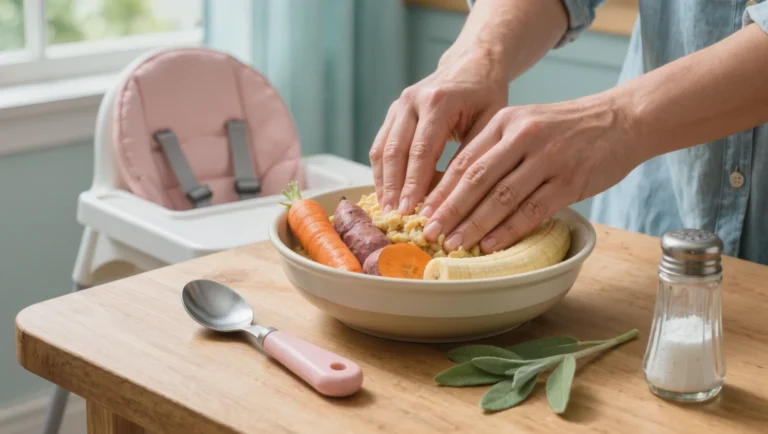
Instead of juice, try “juice you can eat”: mash a little ripe banana or grate a pear into the bowl. Your baby gets the fruit flavour plus the fibre – and gets gloriously messy. 😅
What do the AAP and NHS say by age?
The two organisations differ on details but agree on the essentials: in the early years the best drinks are milk and water, and juice is optional, small and only with food. Here’s how their guidance looks by age.
Read alsoWhen can a baby drink from a cup? Bottle to cup without dramaWhen can babies drink cow’s milk? Calm, clear guidance
| Age | AAP (US) | NHS (UK) |
|---|---|---|
| Under 12 months | No juice; from around 6 months a little water from a cup (about 4–8 oz / 120–240 ml a day) | Not needed; if you choose to give it – diluted (1 part juice to 10 parts water) and only at mealtimes |
| 1–4 years | Not necessary; up to 4–6 oz (120–180 ml) a day (for ages 1–6), with a meal, never at bedtime | Best to avoid sugary drinks, including juice |
| 5 years and up | Whole fruit is still the better choice | Undiluted is fine, up to 1 glass (about 150 ml) a day, with meals |
For more on water, see When can babies drink water? A calm guide by age, and for moving from bottle to cup – When can a baby drink from a cup? Bottle to cup without drama.
What should babies drink instead of juice?
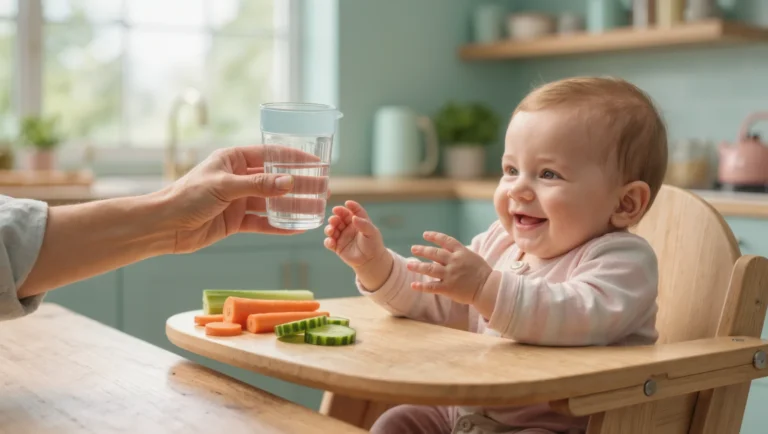
Until 6 months, babies only drink breast milk or formula. Once solids start, the AAP and NHS suggest offering sips of water from a cup with meals. From 12 months, the AAP says plain whole cow’s milk can be added. That’s plenty – juice isn’t needed.
- Around 6 months: offer a few sips of water from an open or straw cup at mealtimes.
- Fruit is for eating: puréed, mashed or softly sliced, depending on the weaning stage (Starting Solids: When and How to Begin).
- After age 1: if you decide to offer juice, keep it small, in a cup and at the table – not for sipping all day.
- At bedtime: the AAP is clear – no juice before bed.
Is it okay if my baby has already had juice?
Yes, and there’s nothing to feel guilty about. One glass of juice at Grandma’s isn’t a problem. The guidance is about everyday habits, not a single festive lunch. From here on, simply offer water and fruit – your baby will adapt quickly.
For Grandma: instead of “they can’t”, try “paediatricians now say fruit is for eating, not drinking – fancy slicing them a pear?” Grandma keeps spoiling, just with a fork. 💛
For dads
You’re in charge of the cup. Put a small cup of water on the table at every meal and drink along with your baby – babies love to copy. And if a guest offers juice, you can calmly suggest a little fruit plate instead. Full of vitamins, and nobody’s offended.
When to ask your paediatrician
The AAP notes that juice shouldn’t be given to treat dehydration or diarrhoea. If your baby has diarrhoea, is vomiting, is drinking less or has fewer wet nappies than usual, or seems floppy and unwell, contact your paediatrician – they’ll tell you what your baby should drink. Talk to your paediatrician before changing anything. They know your baby.
In short
In the first year, babies don’t need juice: milk, a little water from 6 months and fruit to eat are everything they need. After that, juice is optional, small and at the table. Just asking this question shows you’re making great choices – you’re doing better than you think. 🌿
You’ll find more feeding ideas in Baby Feeding.
Sources: AAP / HealthyChildren.org – Where We Stand: Fruit Juice for Children; AAP / HealthyChildren.org – Recommended Drinks for Children Age 5 & Younger; NHS – Drinks and cups for babies and young children; NHS – Foods to avoid giving babies and young children.