

You can welcome visitors to your newborn whenever you and your baby feel ready – there is no single official number of days. In the first weeks it makes sense to keep visits short, few and with a handful of clear rules: clean hands, no kisses on the face and no visitors who are unwell.
The doorbell rings. You’ve been in the same pyjamas for three days, the baby has just dozed off, and in the hallway stand your aunt, your uncle and a very large cake. Everyone wants to “just have a quick look”. 😅
If you feel torn between being glad people love you and simply wanting to sleep – that is completely understandable. You’re not ungrateful and you’re not “difficult”. You’ve just had a baby, and that’s a big deal.
The good news: with a little planning, visitors can be real help instead of one more job. Here’s how.
When is it OK to have visitors after the birth?
There’s no universal deadline after which visitors are “allowed”. It’s your call, and it depends on how you’re recovering, how feeding is going and how much energy you have. Many families let the closest people in first and the wider circle a few weeks later, once things at home have settled.
There is one reason the first weeks are special. According to the NHS (the UK’s national health service), babies are most at risk of catching the herpes virus – the same one that causes cold sores – in the first 6 weeks after birth. The AAP (American Academy of Pediatrics) also explains that a newborn’s immune system hasn’t yet learned how to resist most infections. That’s exactly when hygiene rules make the most sense.
- Listen to yourself: if a visit leaves you drained, the next one can wait.
- Listen to your baby: if they’re unsettled after lots of people and noise, quieter days are fine.
- There’s no “right” answer: some families love a full house, others need calm. Both are normal.
How do I tell family we’re not ready for visitors yet?
Say it early, warmly and with a concrete date or condition rather than “we’ll see”. People accept a boundary more easily when it’s framed as protecting the baby, not as rejection. And remember: you can say “not now” without saying “no”.
- Give a heads-up before the birth: “The first few weeks will be just us – then we’d love to see you.”
- Offer an alternative: a video call, photos in the family chat or a short walk together outdoors.
- Each partner talks to their own side: it’s easier for everyone that way.
- Use a ready-made message: the AAP even offers a sample text for the family group chat, thanking everyone for their love and asking for good hygiene to protect the baby.
If grandparents are the trickier part, have a look at Grandparents: how to set boundaries with love.
Read alsoDog and baby: how to introduce them calmly and safelyRaising a bilingual baby: will two languages confuse them?
Stick a note on the door: “Baby’s asleep, parents are resting. Leave the gift – we love you!” It sounds funny, but it saves a lot of awkward conversations. And the cake still gets delivered. 🎂
What rules should visitors follow with a newborn?
The three key rules are simple: everyone washes their hands before holding the baby; nobody kisses the baby’s face; anyone who is unwell waits until they’re better. They’re based on NHS and AAP advice and aren’t meant to offend anyone – they simply protect the baby while their immunity grows.
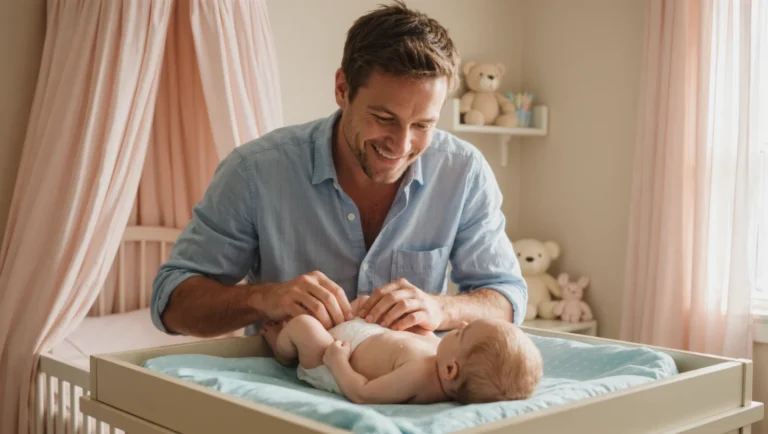
- Hands first: the NHS recommends washing with soap for around 20 seconds – about as long as singing “Happy Birthday” twice. If there’s no soap and water, hand sanitiser will do.
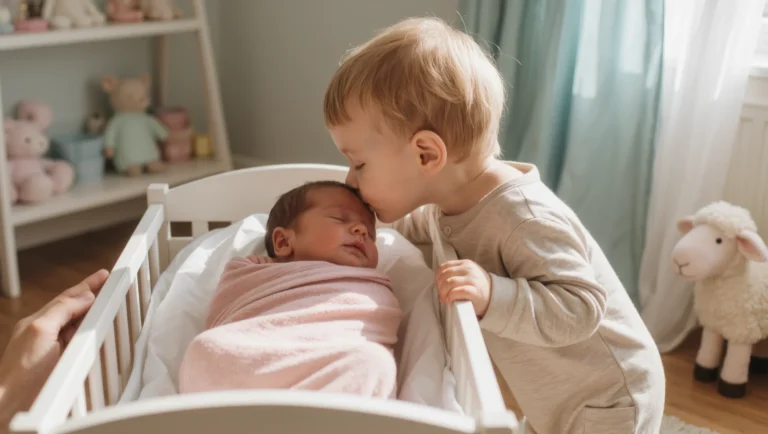
- Kisses from the closest people only: the NHS suggests discouraging anyone who isn’t close family or a carer from kissing the baby. The safest place for a kiss is the top of the head, not near the mouth, nose or eyes.
- Cold sore = no kisses: according to the NHS, anyone with a current cold sore or a recent history of cold sores shouldn’t kiss the baby.
- Unwell visitors stay home: the AAP describes “cocooning” the baby – loved ones let you know when they’re sick and come back once they’re well.
- Little ones, gently: the AAP suggests gently reminding young children not to kiss the baby or get too close, especially if they’re coughing.
Short or long visits, at home or outdoors?
New parents usually find short home visits easiest, especially when the visitor brings something useful. Long gatherings with lots of people tend to tire out both baby and parents. Here’s a rough guide – the choice is yours.
| Type of visit | When it works | What to ask for |
|---|---|---|
| Video call | The first days, or when you’re exhausted | Short, at a time that suits you |
| Short home visit (30–60 min) | Closest family, first weeks | Clean hands, food or help around the house |
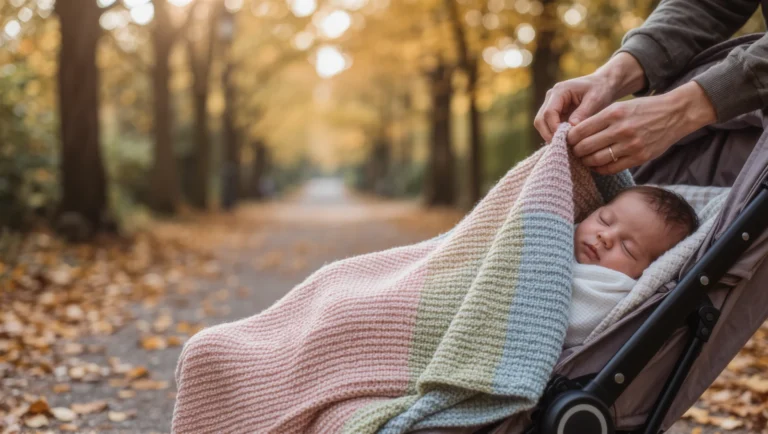
| Walk outdoors | When you and the baby are ready to go out | Not much handling, baby stays in the pram |
| Big get-together | Later, once life is calmer | A quiet corner you can retreat to |
More ideas for bigger family gatherings are in Baby’s first Christmas: how to keep the holidays calm (and fun).
Can visitors hold the baby?
Yes, if they’re well and have washed their hands – cuddles are part of the joy. You decide how long and when. If the baby is hungry, tired or has just fallen asleep, it’s perfectly fine to say “not right now” and keep them with you.
Visitors who really want to help can do something else while you cuddle: put on a wash, do the dishes or bring a ready meal. That’s the best gift of the early weeks.
When someone asks “How can I help?”, have a list ready on the fridge: “soup”, “walk the dog”, “food shop”. People love a concrete task. 💛
For dads
You’re the “gatekeeper”. Manage the visitor schedule, remind people about hand washing and say a polite “thanks so much for coming” when mum gets tired. That way she doesn’t have to be the bad guy. More ideas in How dads can help in the first weeks.
When should you call the doctor?
If after a visit (or at any time) your baby is unusually irritable and won’t settle, isn’t feeding as well as usual, has a temperature of 38°C or more, or develops a rash or sores on the skin, around the eyes or in the mouth, the NHS advises contacting a doctor straight away. If anything worries you, just call – your doctor knows your baby and is there to help.
In short
Visitors can wait, and the rules can be short: clean hands, no kisses on the face, no unwell guests. You’re protecting your little nest, and your loved ones’ affection will still find its way in – a bit later, with the same cake. You’re doing better than you think. 💛
More on life as a new family in Parenting & Family.
Sources: NHS – Neonatal herpes (herpes in a baby); NHS – How to wash your hands; AAP / HealthyChildren.org – How to Cocoon a Newborn.