This guide may contain affiliate links. If you buy through them, we may earn a small commission at no extra cost to you. Learn more
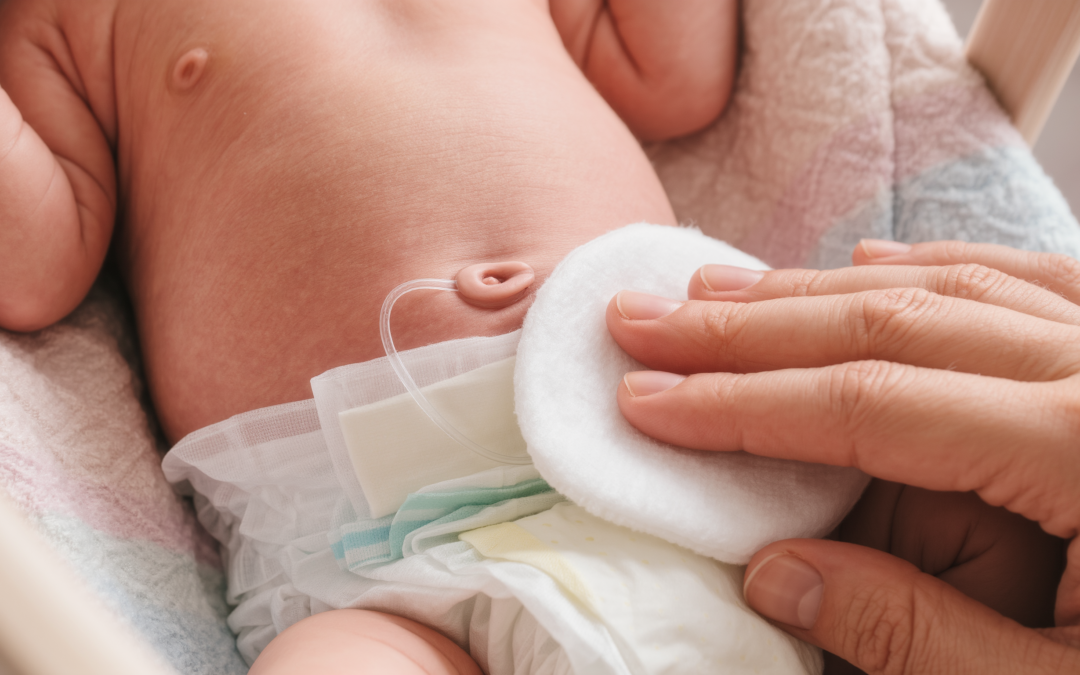
The little umbilical cord stump is something many parents look at with respect and a touch of fear. It looks unusual, changes colour, and nobody wants to catch it with the nappy. If you’ve been wondering exactly how to handle it – here’s the short version: you hardly need to touch it at all.
The belly button knows what it’s doing. Your job is to help it stay clean and dry – nothing more.
What happens to the cord after birth?
Once the umbilical cord is cut, a small stump is left. It gradually dries out and darkens – from yellowish to brown or black – and falls off on its own. According to the Mayo Clinic, this usually happens about 2 weeks after birth, most often between week 1 and week 3.
The darkening is part of the normal process. It’s not a sign that anything is going wrong.
How do you care for the cord stump?
The World Health Organization (WHO) recommends so-called “dry cord care” for babies born in hospital with good hygiene conditions. That means keeping the stump clean and dry, without creams, powders or routinely applying antiseptics. If the maternity ward or your paediatrician has given you different instructions – follow theirs.
- Let the air get to it. Fold the top edge of the nappy down so the stump stays uncovered.
- If it gets dirty with poo or wee, clean it gently with plain water and pat it dry with a clean cloth.
- Sponge baths instead of a tub until the stump falls off.
- Choose loose clothes that don’t rub on the tummy.
- Wash your hands before touching the area.
However tempting it is – don’t pull the stump, even if it’s hanging by a thread. It’ll fall off on its own when it’s ready. Patience is the best medicine here. 😉
What’s normal?
- the stump darkening and becoming dry and hard;
- a little blood or clear fluid on the nappy around the days it falls off – a bit like the scab on a grazed knee;
- a slightly moist spot for a few days after it falls off.
When to see your paediatrician
Contact your doctor the same day if you notice:
- redness, swelling or warmth of the skin around the belly button, especially if it’s spreading;
- a yellowish, bad-smelling discharge;
- bleeding that won’t stop or keeps coming back;
- your baby cries when you touch the area;
- the stump still hasn’t fallen off after about 3–4 weeks;
- after it falls off, a moist pink lump remains that doesn’t dry up for days.
If any of these signs come with a fever, your baby is floppy, isn’t feeding, or the redness is spreading quickly across the tummy – don’t wait, call 112 or go to A&E. In newborns, infections can progress quickly, and fast help matters here.
Don’t put coins, bands or tight dressings over the belly button – neither before nor after the stump falls off. They trap moisture, and the shape of the belly button doesn’t depend on them anyway.
For the dads
Nappy changes with a cord stump are great training ground. Split the shifts and help each other keep an eye on how the belly button looks – two pairs of eyes see more than one.
In short
Clean, dry, open to the air – and a little patience. That’s the whole “secret”. A few weeks from now you’ll wonder why you worried so much, and where the stump used to be there’ll be a perfectly ordinary little belly button, just right for tickling. You’re doing better than you think. 💛
Sources: Mayo Clinic – Umbilical cord care: Do’s and don’ts for parents; MedlinePlus (U.S. National Library of Medicine) – Umbilical cord care in newborns; Cincinnati Children’s – What Should You Know About Your Baby’s Umbilical Cord?; Anales de Pediatría – Recommendations for the care of the umbilical cord in the newborn.
More from this section


Your baby, week by week
Once a week: what's coming up, one useful tip and nothing extra.