
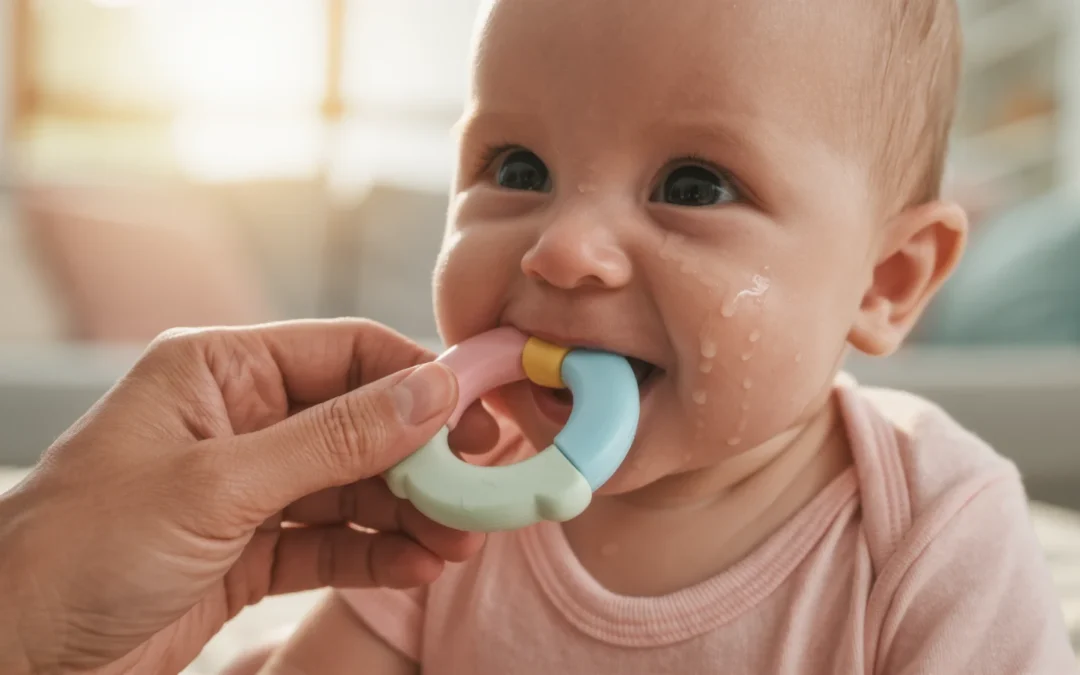
Drool like a small waterfall, a fist permanently in the mouth and a mood that changes every five minutes. Welcome to teething season! Teething is one of those stages everyone has advice about – Grandma, the neighbour, the forum at 3 a.m.
Let’s separate fact from legend. The truth is a bit more boring than the legends – but it actually works.
The short answer: The first tooth usually appears around 6 months, with drool, red gums and chewing on everything. A gum massage with a clean finger or a chilled firm teether helps. Teething doesn’t cause a high temperature, diarrhoea or a body rash, so tell your paediatrician if you see those. Avoid teething necklaces.
When does teething start?
For most babies, the first tooth appears around 6 months, but there’s a big difference between children – for some it’s earlier, for others after their first birthday. Both are normal. Teeth aren’t a race.
How can you tell teeth are on their way?
- more drool than usual;
- red, swollen gums;
- chewing on everything within reach – including your finger;
- more grizzly than usual and sometimes harder to feed;
- rubbing their cheek or pulling at their ear.
Important: according to the American Academy of Pediatrics (AAP) and the NHS, teething doesn’t cause a high temperature, diarrhoea, vomiting or a rash on the body. If those are present, the cause is probably something else – tell your paediatrician rather than putting it all down to teeth.
What really helps?
- A clean finger. A gentle gum massage with a washed finger – free and always to hand.
- A firm rubber teether. You can chill it in the fridge, but not the freezer – frozen, it can hurt the gums. Avoid teethers with liquid inside.
- Cold foods, if your baby has started solids – for example chilled purée or a piece of fruit, always supervised.
- Wiping their chin dry – drool can irritate the skin.
- Lots of cuddles and distraction. It really works.
If your baby is very unsettled, ask your paediatrician whether a painkiller is suitable for their age, and which one, and follow the leaflet.
Don’t dip the teether or dummy in sugar or honey. Sugar harms new teeth, and honey isn’t given to babies under 12 months because of the risk of botulism (a rare but serious poisoning).
What about amber necklaces?
It looks magical: warm honey-coloured beads, ancient resin, the promise of natural relief. The truth is more boring. There’s no evidence that amber relieves teething pain.
The US Food and Drug Administration (FDA) specifically advises against using teething necklaces and bracelets – whether made of amber, wood, silicone or any other material. The agency has received reports of choking and strangulation, including a death. A bead can come loose and get into the airway, and the necklace can get caught on something.
If you already have one – no guilt. Take it off and keep it as a keepsake. What matters is what you do from here on.
One more thing: the FDA warns that gum gels containing local anaesthetics (benzocaine or lidocaine) shouldn’t be used for teething. Before reaching for any gum product, ask your paediatrician.
When to ask your paediatrician
- your baby has a fever, diarrhoea or is vomiting;
- they’re refusing feeds and having noticeably fewer wet nappies;
- they’ve been crying for days and nothing settles them;
- there’s still no tooth at all around their first birthday – just for everyone’s peace of mind.
For the dads
Toothbrushing starts with the very first tooth. It could become your daily ritual with your baby – with a soft baby toothbrush and lots of patience. The song is optional.
In short
Teething isn’t cured by magic, but by a clean finger, a cool teether and lots of hugs. Relax – those teeth will arrive on their own schedule, and you already know how to help. Soon you’ll be snapping the first smile with two little white dots – and this stage will be just a funny story. 😁
Sources: U.S. FDA – FDA Warns Against Use of Teething Necklaces, Bracelets, and Other Jewelry Marketed for Relieving Teething Pain; U.S. FDA – Safely Soothing Teething Pain in Infants and Children; NHS – Tips for helping your teething baby; American Academy of Pediatrics (HealthyChildren.org) – Teething.
More from this section



Your baby, week by week
Once a week: what's coming up, one useful tip and nothing extra.
