This guide may contain affiliate links. If you buy through them, we may earn a small commission at no extra cost to you. Learn more
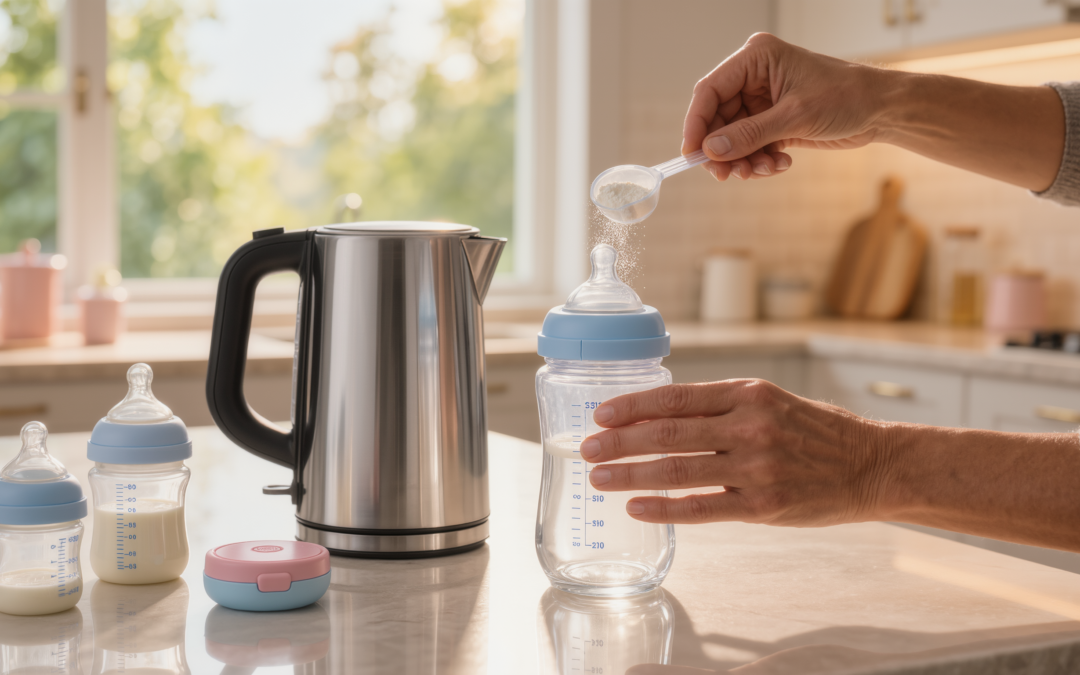
A tin of powder, a measuring scoop, a bottle and a hungry baby who doesn’t want to wait. Sounds like a cooking show under pressure, doesn’t it? No worries – within a few days the whole routine will feel easy. Here’s what the World Health Organization (WHO) and the UK’s NHS advise – step by step.
Why are there so many rules?
Powdered infant formula isn’t sterile. That means that, rarely, it can contain bacteria such as Cronobacter and salmonella. A baby’s immune system is still developing, so a few simple habits lower the risk enormously. This isn’t a reason to worry – it’s just good to know why you’re doing things.
How to get the bottle ready
- Wash bottles and teats in hot soapy water, using a bottle brush.
- Sterilise them. There are several options: boiling in water for at least 10 minutes, a steam steriliser (electric or microwave), or cold-water sterilising with a solution – for at least 30 minutes, with the solution changed every 24 hours.
- A dishwasher cleans bottles well, but according to the NHS it doesn’t sterilise them.
Set a 30-minute timer as soon as the water boils. That way you won’t have to guess whether it’s still hot enough or whether it’s time to boil again. ⏱️
How to make up the formula – step by step
- Clean the work surface and wash your hands well with soap.
- Boil fresh water and let it cool a little, but for no more than 30 minutes. That way it stays at least 70°C – a temperature which, according to the WHO and NHS, kills harmful bacteria in the powder.
- Pour the water into the bottle first – the exact amount stated on the pack.
- Add the powder with the scoop from the same tin, levelled off with a clean, dry knife or the built-in leveller. Don’t add more or less than stated – the WHO warns this can harm your baby.
- Close the bottle and shake until the powder dissolves.
- Cool it quickly under cold running water or in a bowl of cold water.
- Check the temperature by dripping a little onto the inside of your wrist. It should feel warm or lukewarm, not hot.
What not to do
- Don’t warm it in the microwave – it heats unevenly and can leave very hot spots.
- Don’t reuse leftovers. Milk your baby hasn’t finished gets thrown away. According to the WHO, unfinished feed should be discarded within 2 hours of preparation.
- The NHS doesn’t recommend bottled water for making up formula, because it isn’t sterile and may contain a lot of salt (sodium) or sulphates. If you have doubts about your tap water at home, check with your paediatrician.
During the day, set out a sterile bottle with a pre-measured container of powder next to it. At night all that’s left is boiling and mixing – no counting scoops half-asleep.
Can I make bottles in advance?
It’s safest to make up each bottle fresh, just before a feed. If you really need to, the WHO says that formula made up and cooled quickly can be stored in the fridge at no more than 5°C for up to 24 hours.
For travel and night feeds there’s another option – ready-to-feed liquid formula. It’s sterile until opened, but it costs more. If convenience on the go matters to you, it may be worth it. If you use a bottle-making machine, check in the instructions that the water reaches at least 70°C.
For the dads
Making up a bottle is a job you can become a true pro at. Remember the mantra: water first, powder second, wrist test last.
When to ask your paediatrician
If your baby was born early, with a low birth weight or with a weakened immune system, ask which milk and which preparation method are best. The WHO recommends sterile liquid formula for babies at the highest risk of infection. Also call if your baby has a fever, diarrhoea or is refusing feeds.
In short
Clean hands, a sterile bottle, water of at least 70°C, the exact measure and a wrist test. That’s all the magic there is. By the tenth time your hands will be on autopilot – even with your eyes closed at 3 a.m. And you’ll be proud of yourself. 💪
Sources: WHO – Safe preparation, storage and handling of powdered infant formula: guidelines; NHS – How to make up baby formula; UNICEF UK Baby Friendly Initiative – Guide to bottle feeding.
More from this section


Your baby, week by week
Once a week: what's coming up, one useful tip and nothing extra.