
This guide may contain affiliate links. If you buy through them, we may earn a small commission at no extra cost to you. Learn more
Peanuts for a baby? Until recently that sounded like a forbidden topic – today paediatricians talk about it quite calmly. If you’re wondering why the advice has changed and how to approach it without stress, this article is for you. And one important note right away: your allergen plan is made together with your paediatrician – you’re not on your own with this.
What changed in the recommendations?
Years ago, the advice was often to delay allergenic foods. Newer studies showed the opposite. According to the NHS, delaying peanuts and eggs beyond 6–12 months of age may increase the risk of being allergic to them.
The American Academy of Pediatrics (AAP) recommends introducing peanuts and eggs early – alongside first solid foods, not later – for babies with no previous reaction. And the results are already showing: a study published in Pediatrics in 2025 reports a drop of about 27% in peanut allergy among children up to 3 years old in the US after the change in recommendations. It’s an observational study, but the signal is encouraging. 🌱
When and how to start
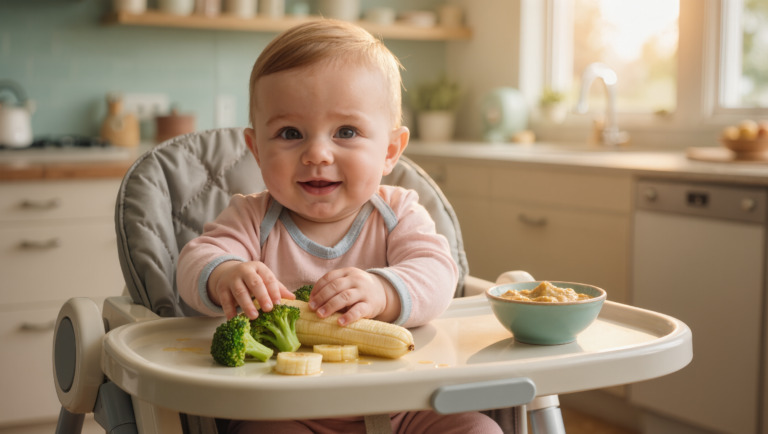
The NHS advises introducing allergenic foods from around 6 months, as part of starting solids:
- one at a time – that way you’ll easily spot a reaction and know what caused it;
- in small amounts to begin with;
- once they’re well tolerated, keep them in the menu regularly – a single taste isn’t enough.
Keep a little “taste diary”: date, new food, reaction. After a month you’ll have a great map of the menu – and confident answers to your paediatrician’s questions.
How to give peanuts and eggs safely
- Peanuts: never whole – they’re a choking hazard for young children. The NHS advises crushed or ground. A common option is smooth peanut butter with no added salt, mixed into a familiar food so it isn’t sticky.
- Eggs: well cooked – hard-boiled, finely chopped and mixed into a purée, or cut into finger strips.
- Choose a day and time when your baby is well and you’ll be at home to keep an eye on them.
HealthyChildren.org (AAP) gives as example amounts about 2 teaspoons of peanut butter or about a third of a well-cooked egg, included regularly in meals. Check the specific rhythm and amounts for your baby with your paediatrician.
What if your baby has eczema or already has an allergy?
Then the path is a little more individual. Babies with severe eczema (very inflamed, dry, itchy skin) or an already confirmed food allergy are considered higher risk. For them, the AAP and NHS advise talking to the paediatrician first – sometimes the introduction is planned in a special way or tests are done.
Don’t introduce a new allergen on a day when your baby has a cold, is having an off day or you’re travelling. A calm day at home = a clear picture.
What does an allergic reaction look like?
Most babies take new foods without any problem. Still, it’s good to know the signs:
- milder: red blotches or a rash around the mouth or on the body, slight swelling of the lips, vomiting – stop that food and contact your paediatrician;
- serious: difficult or noisy breathing, swelling of the tongue or throat, sudden paleness or floppiness – call 112 straight away.
Knowing this isn’t a reason for fear, but for confidence – like knowing where the emergency exit is.
For the dads
First-peanut-butter day is a great reason for both of you to be at the table. One watches, the other photographs the face of the new taste tester. 😄
In short
Early, one at a time, a little at a time and regularly – and always with your paediatrician by your side as an ally. This is a calm plan, not an experiment. Every new food is a small victory – and you’re perfectly able to win it, step by step.
Sources: NHS Best Start in Life – Baby food allergies; HealthyChildren.org (AAP) – When to Introduce Egg, Peanut Butter & Other Common Food Allergens; AAP – Peanut allergies declined following recommendation for early introduction (2025); AAP News – New guidelines detail use of infant-safe peanut.
More from this section


Your baby, week by week
Once a week: what's coming up, one useful tip and nothing extra.