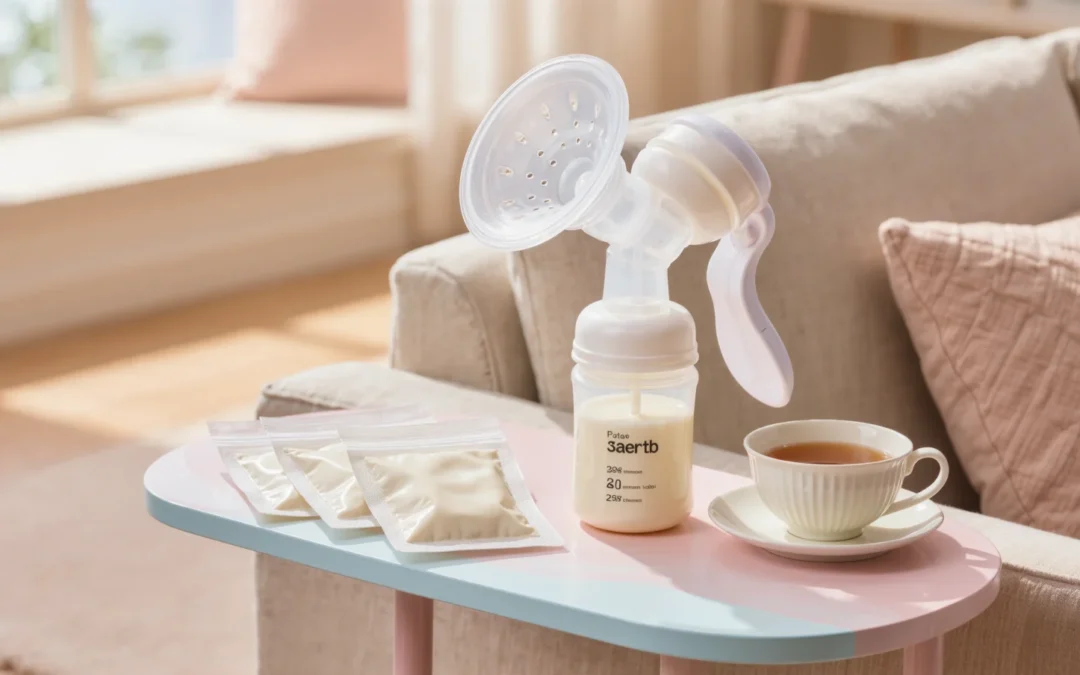
A breast pump is one of those purchases that loads of people discuss with huge confidence – and everyone says something different. The truth is simple: there’s no best pump for everyone. There’s the pump that fits your rhythm, your needs and your body. Let’s find it together.
The short answer: Choose by how often you’ll express. A manual pump is often enough for occasional use, a double electric pump suits regular expressing, and a wearable pump works best as an extra. If your baby can’t feed at the breast, ask about renting a powerful pump.
First: what do you need it for?
Before you look at models, answer one question: how often will you be expressing?
- occasionally – for an evening out or if your breasts feel too full;
- regularly – for example after going back to work;
- all the time – if your baby can’t feed directly from the breast or is in a neonatal unit.
Almost everything else depends on that answer.
Manual pump: when is it a good choice?
- Pros: affordable, quiet, light, no power needed. Good for occasional expressing and for relief when your breasts are overfull.
- Cons: it’s slower and your hand can get tired.
Electric pump: single or double?
- Pros: faster and less tiring. A double electric pump expresses both breasts at once and saves time – that matters when you’re expressing regularly.
- Cons: more expensive and noisier, needs mains power or batteries. The FDA advises having a back-up plan – for example a manual pump or hand expressing if there’s a power cut.
Before ordering a pump, check whether the manufacturer offers flanges in different sizes and spare parts. One lost little valve can bring the whole operation to a halt.
Wearable pump: freedom with conditions
These pumps fit directly inside your bra and have no loose tubes.
- Pros: discreet, hands-free and handy when you’re out.
- Cons: according to NHS hospitals, they’re often less powerful and don’t fit every breast shape equally well, so they’re usually not recommended as your only pump if you’re exclusively expressing or need to boost your supply. Some guides warn that wearing them in your bra for long periods can press on the breast and contribute to blocked ducts.
What about “hospital” pumps?
Powerful multi-user pumps are useful for building up or supporting your milk supply – for example if your baby is in hospital. They’re expensive and are often rented. An important note from the US FDA: it doesn’t recognise the term “hospital grade” – it’s more of a marketing label, so read what’s actually behind it.
Safety – the essential filter
- Second-hand pumps: the FDA warns that personal-use pumps are designed for one woman, because they can’t be reliably cleaned between different users. The exception is rental multi-user pumps, where each woman gets her own kit.
- Flange size: the flange is the part that fits over your breast. If it’s not the right size, you may express less milk and get sore nipples.
- Before buying, read the instructions and check that the parts come apart and wash easily.
If you’re expressing at the office, keep a photo of your baby on your phone and look at it while you pump – it can help you relax.
What matters most to you?
- If you express occasionally → a manual pump is often all you need.
- If you’re going back to work → look at double electric pumps.
- If discretion and free hands are a priority → a wearable pump, but preferably as an extra.
- If your baby can’t feed at the breast or you need to support your supply → ask about renting a powerful pump and find a breastfeeding consultant.
For the dads
Washing and reassembling the pump parts is one of the most appreciated kinds of help you can give. It’s not glamorous, but it will be remembered. 😉
When to ask for help
If expressing hurts, your nipples are getting damaged, or you notice a painful, red lump in your breast – especially with a fever – contact a midwife, doctor or breastfeeding consultant. Sometimes the problem is just the flange size or the settings.
In short
Choose a pump to fit your life, not someone else’s. You know your day, your needs and your body better than any forum – and with these criteria in hand, the decision will come much more easily than it looks. 💛
Sources: FDA – Types of Breast Pumps; FDA – What to Know When Buying or Using a Breast Pump; NHS Best Start in Life – Expressing breast milk with a pump; NHS Grampian – What is the difference between breast pumps?.
More from this section


Your baby, week by week
Once a week: what's coming up, one useful tip and nothing extra.