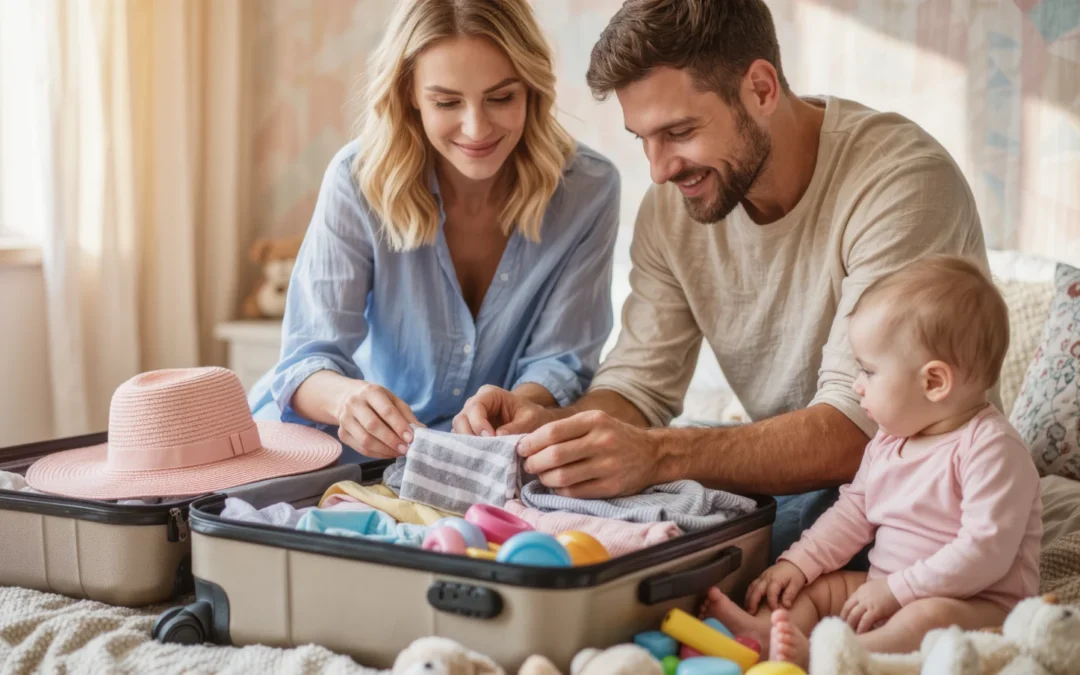
“A holiday with a baby” sounds either like a dream or a joke – depending on who you ask. The truth is somewhere in between: it’s not the same kind of break as before, but it can be one of the best.
Sand that someone is determined to eat. The first morning squeal in a new room. A photo where all three of you are dishevelled and happy. Let’s get the practical side sorted, so there’s more room for the good stuff.
The short answer: Before you leave, sort out your baby’s own ID document, their own EHIC and travel insurance that includes them. Pack nappies, layered clothes, feeding kit, a first-aid kit and sun protection. At night, the same safe-sleep rules apply as at home.
What to sort out before you travel
- Your baby’s ID document. If you’re crossing a border, your child needs their own document, from birth. Within the EU an ID card is usually enough; outside the EU, a passport. Check processing times early.
- European Health Insurance Card (EHIC). It’s personal, so your baby needs their own – yours doesn’t cover them. The card gives access to necessary state healthcare in another EU country, but it doesn’t replace travel insurance.
- Travel insurance that includes your baby.
- A chat with your paediatrician if your baby has a long-term condition, takes medication, or you’re travelling far outside Europe.
- Accommodation: ask whether the hotel’s baby cot is safe and whether there’s a fridge and a way to warm up food.
Pack a separate “first night bag”: pyjamas, nappies, sleeping bag, favourite toy, toothbrush. If you arrive late and tired, you won’t have to unpack your entire life at midnight. 🌙
The packing list
- Nappies and wipes for the first few days (you can buy the rest when you get there).
- Clothes in layers, plus one warmer item even in summer – for air conditioning and evenings.
- A sleeping bag that smells of home.
- Feeding kit and familiar food for the first few days.
- First-aid kit: thermometer, saline solution, and whatever your paediatrician has recommended for your baby.
- Sun protection pack: a hat, light long-sleeved clothes, a pram sunshade.
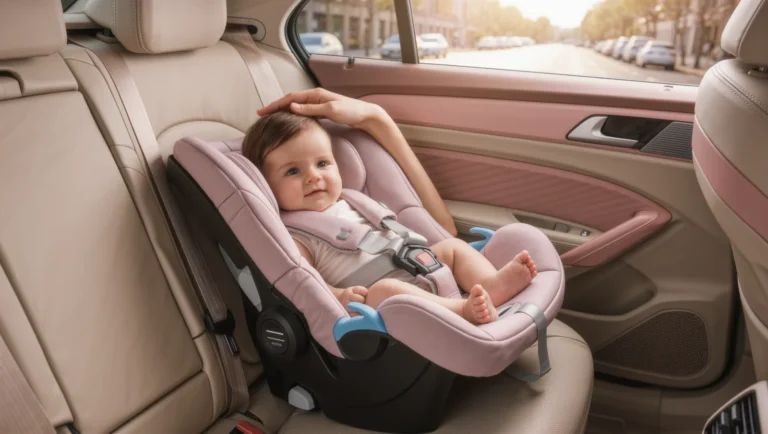
- A car seat – your own or a hired one, but checked.
How to protect your baby from the sun on holiday
The NHS, the UK’s health service, gives clear guidance: babies under 6 months should be kept out of direct sunlight, and sunscreen isn’t recommended for them. From 6 months – sunscreen with SPF 50 or more and UVA and UVB protection, plus as little sun as possible between 11 a.m. and 3 p.m. On the beach, a UV-protective beach tent often gives better shade than a parasol, because sand and water reflect the rays.
Where will your baby sleep?
The new sleeping spot doesn’t need to be complicated. The same rules apply as at home: your baby sleeps on their back, on a firm, flat mattress, with no pillows, thick blankets or soft toys around them. If you’re taking a travel cot, put it up a few times at home before the trip – and only use the mattress that came with it. That way both you and your baby will feel at home from the very first night.
The routine: keep it or not?
A bit of both. Keep the anchors – the bedtime ritual, the song, the familiar sleeping bag. And let the timings slide a little. Plan one big thing a day, not three.
For the dads
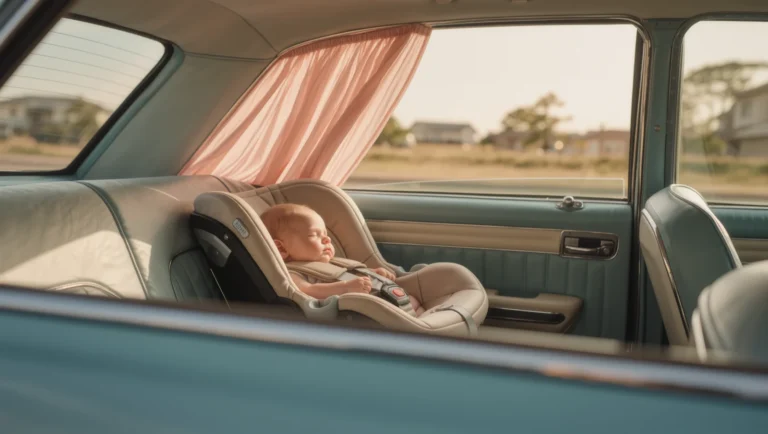
If you’re hiring a car with a car seat, you’re the one for the inspection: is it right for your baby’s height, does it have an approval label, is it intact, how is it fitted? If anything doesn’t seem right, ask for another one. No holiday is worth compromising on the car seat.
In short
Documents, a list, shade and a little flexibility – with those, you’ve covered most of the preparation. The rest is improvisation – and parents become real pros at that with every week that passes. Set off light and with a smile. 🏖️
Sources: NHS – Safety in the sun; Finnish Contact Point for Cross-border Healthcare – Holidaying with your children in Europe; Familienportal NRW – Travel documents for children.
More from this section
Your baby, week by week
Once a week: what's coming up, one useful tip and nothing extra.