
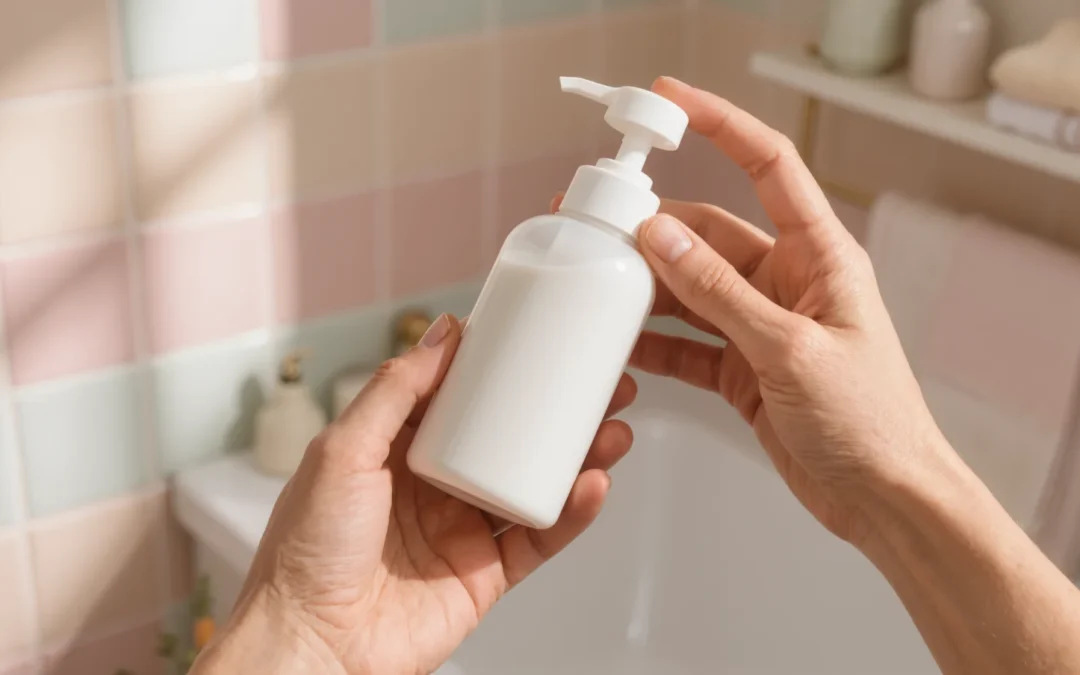
You turn the bottle over and see three lines of Latin-looking words, half of them unpronounceable. Meanwhile the internet is full of lists of “scary ingredients”. And suddenly an ordinary baby shampoo looks like a chemistry exam. 🧴
Take a breath. You don’t need to be a chemist to choose well. A few basic rules are enough.
The short answer: Ingredients are listed from most to least, and Latin-style names are simply the international system. In the EU, products for under-3s get a specific safety assessment. The AAP recommends fragrance-free, hypoallergenic products, and a newborn needs only a few basics.
Who checks cosmetics in the EU?
In the European Union, cosmetics are governed by Regulation (EC) No 1223/2009. Before it reaches the shelf, every cosmetic product must have a safety assessment. For products intended for children under 3, the regulation requires a separate, specific assessment. In other words: baby cosmetics in the EU get an even closer look.
That doesn’t mean every product will suit every baby. It means you don’t need to be afraid of the long names.
How to read the ingredients list
- The order matters. Ingredients are listed from the largest amount to the smallest. Those under 1% can appear in any order at the end. Often the first word is Aqua – that’s just water.
- The Latin-style names are deliberate. The international INCI system is used so that labels read the same in every country. “Helianthus Annuus Seed Oil” sounds serious, but it’s sunflower oil. 🌻
- Parfum or Fragrance means scent.
Look for “fragrance-free” rather than “unscented”. According to the American Academy of Dermatology, “unscented” can mean the fragrance has simply been masked, whereas “fragrance-free” means there’s none at all.
Why is everyone talking about fragrance?
Fragrances aren’t “poison”. They’re simply among the common causes of contact allergy. The European Commission estimates that around 1–9% of people in the EU have a fragrance allergy. That’s why certain fragrance allergens are listed by name in the ingredients (for example Linalool, Limonene), and an update in 2023 expands that list.
The American Academy of Pediatrics (AAP) recommends fragrance-free, hypoallergenic products for babies – for after-bath cream, soap and laundry detergent alike.
The “less is more” rule
A newborn doesn’t need whole shelves of toiletries. Some UK hospitals advise bathing with plain water only for the first few weeks. And when you do start using products:
- pick a few basics instead of ten specialist ones;
- introduce new ones one at a time, so you know which is the culprit if redness appears;
- words like “natural” and “organic” are nice, but they don’t guarantee better tolerance. Essential oils are fragrances too.
And a question for you: what matters for your baby? If their skin is dry → look for a simple fragrance-free cream. If they’re prone to eczema → talk to your paediatrician about suitable products.
Before using a new cream, apply a little to a small patch of skin and watch for a day or two. If all’s well, carry on. If redness appears – stop, and take a photo of the label for the next check-up.
For the dads
If you hold your baby after shaving, bear in mind that strong scents on your skin and clothes reach them too. Just keep an eye on whether their skin reacts.
In short
The label isn’t a code to crack. The first ingredients are the biggest amounts, Parfum means scent, and a shorter list is often a good idea. Now you can turn the bottle over and actually read what you see. That’s no small thing. 😊
Sources: EUR-Lex – Regulation (EC) No 1223/2009 on cosmetic products; EUR-Lex – Commission Regulation (EU) 2023/1545 (labelling of fragrance allergens); American Academy of Pediatrics (HealthyChildren.org) – Bathing Your Baby; American Academy of Dermatology – How can I find eczema friendly products?.
More from this section
Your baby, week by week
Once a week: what's coming up, one useful tip and nothing extra.
