

It’s minus two outside, the radiator is ticking, and you’re standing over the cot holding a second vest, wondering: on or off? You touch the little hands – cold. The feet – cold too. Suddenly you want to wrap them up like a burrito. 😅
If you’re unsure, that’s completely understandable. Every parent asks this question in their first winter with a baby. The good news: there are clear, simple pointers, so you don’t have to guess.
Relax, you’ve got this – a few habits and one inexpensive room thermometer answer most of the questions.
What temperature should a baby’s room be?
According to the NHS (the UK’s health service) and the Lullaby Trust (a UK safer-sleep charity), a comfortable and safe temperature for a sleeping baby is between 16 and 20°C (about 61–68°F). Yes, that’s cooler than many of us keep our homes.
Why? Young babies aren’t very good at regulating their own temperature yet. The NHS explains they can overheat from too much clothing or bedding, or a room that’s too warm – and overheating is linked to a higher risk of SIDS (sudden infant death syndrome, the sudden unexplained death of a baby during sleep). That’s why the NHS puts it simply: babies are better a little cool than too hot.
- Get a room thermometer: it’s hard to judge temperature by feel. The Lullaby Trust recommends one in the room where your baby sleeps.
- The heating doesn’t need to run all night: the Lullaby Trust says it’s rarely necessary – an extra layer of clothing usually does the job.
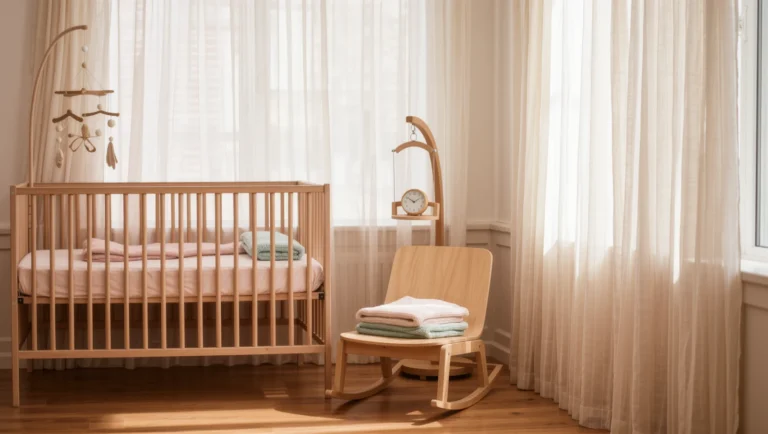
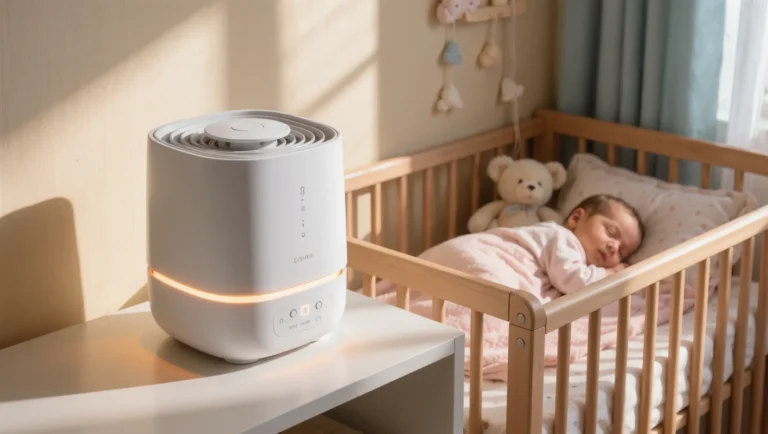
- Keep the cot away from the radiator: the NHS says babies should never sleep next to a radiator, heater or fire, or with a hot water bottle or electric blanket.
A thermometer is most useful at cot height, not up near the ceiling or by the window. Two minutes of setup – and you stop second-guessing ten times an evening. 🌡️
How should you dress your baby for sleep in winter?
The AAP (American Academy of Pediatrics) has an easy rule: your baby needs only one layer more than you’d be comfortable in in the same room.
Read alsoWhen can a baby sleep in their own room? Calm, clear guidanceCo-Sleeping: Facts From All Sides
In practice, the NHS suggests:
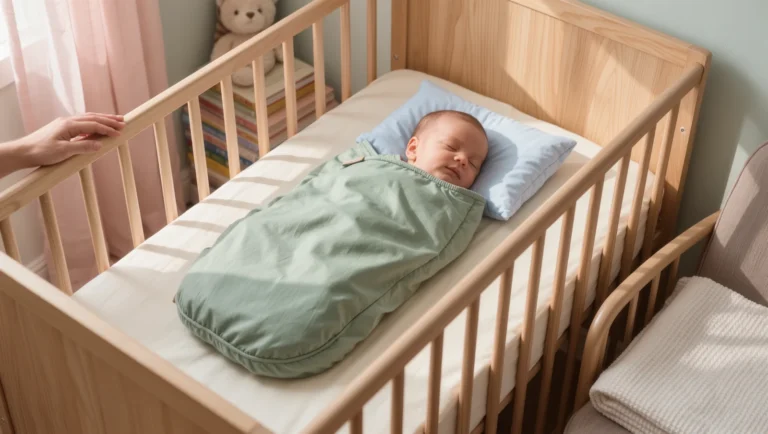
- Sleepsuit + sleeping bag: check the manufacturer’s TOG recommendation – TOG measures how warm the bag is. There’s more in our guide Baby Sleeping Bag: How to Choose the TOG and Size.
- If they seem cold in the sleeping bag: add a layer of clothing (say, a long-sleeved vest), not extra blankets.
- If you use blankets: lightweight cellular ones, tucked in securely. No thick, fleecy or padded blankets. A folded blanket counts as two layers.
- No hats indoors: both the NHS and AAP say not to put a hat on your baby indoors or for sleep – their head helps them release extra heat.
The AAP adds: no weighted blankets, swaddles or sleep sacks with weights. In the cot – just a mattress with a fitted sheet and baby on their back. More in Safe Sleep: Simple Rules That Lower the Risk of SIDS.
How can you tell if your baby is too hot or too cold?
Here’s the most common trap. Babies’ hands and feet are often cool – and the NHS says that’s normal. They don’t tell you how warm your baby is.
- Feel the chest or the back of the neck: that’s what the NHS and the Lullaby Trust advise. Warm and dry – all good.
- Signs of overheating: according to the AAP – sweating, a hot chest, flushed skin. Remove a layer of clothing or bedding.
- Cool neck: add a thin layer and check again shortly.
Home from a walk and baby’s asleep in the pram? The NHS advises taking off the hat and coat as soon as you’re indoors – even if it wakes them. Painful, we know. But a short grumble beats overheating. 💛
What if your home is colder than 16°C?
It happens – old buildings, radiators that barely work, energy bills. Don’t panic. Add a layer under the sleeping bag or choose a warmer bag following the manufacturer’s guidance. If another room is warmer, you could move the cot there, away from heaters. If it’s too warm (over 20°C), open a window in another room for a bit, remove a layer and check the neck.
For daytime walks in the cold, we have a separate guide: Winter walks: how to dress your baby.
For dads
Do an evening “pre-flight check”: thermometer, sleepsuit, sleeping bag, no hat, cot away from the radiator. It takes a minute, and mum can fall asleep without one more thing on her mind. And if you’re up at night, checking the back of the neck is your little mission.
When to ask your paediatrician
If your baby seems unwell, unusually floppy, hard to wake, or something just feels different – don’t try to fix it with clothes; contact your paediatrician. And if you’re seriously worried, get medical help right away. Your paediatrician knows your baby and is your best ally.
In short
16–20°C in the room, one layer more than you, no hat, and check warmth at the neck, not the hands. Winter nights aren’t an exam, just a season – and now you know what to do. For more calm-sleep ideas, see Baby Sleep. You can do this. 💛
Sources: NHS – Sudden infant death syndrome (SIDS); NHS Best Start in Life – How to dress a newborn baby; AAP / HealthyChildren.org – How to Keep Your Sleeping Baby Safe; The Lullaby Trust – Safer sleep in winter.