

You have just got them down. You have exactly twenty minutes, a coffee that is still warm, and no idea what to do first. Then the baby wakes up after seventeen minutes. 😅
If your baby’s daytime sleep feels like a puzzle with no solution, that is completely understandable. Naps are probably the least predictable part of the first year, and books, apps and relatives all give different numbers. No worries, all is well: let us stick to what reliable sources say.
How much do babies sleep in the day?
First, the big picture. According to the NHS, newborns sleep a lot: some around 8 hours a day, others up to around 18, and both are perfectly normal. The Sleep Foundation says newborns typically sleep 16 to 18 hours a day, but in small pieces: a series of naps, each of which can last from one to four hours.
After that, per the American Academy of Sleep Medicine, babies aged 4 to 11 months need 12 to 16 hours of sleep in total, including naps. It is typical for babies to keep napping for 2 to 3 hours or more a day. These are ranges, not a grade for you or your baby.
Why is there no “right” number of naps?
Because every baby has their own rhythm. The NHS says plainly that some babies need more sleep and some less, and it is best not to compare yours with others. Routines also change: just when you think you have cracked it, it shifts again.
- The first weeks: sleep comes in short bursts, tied to feeding. No schedule is expected.
- Around 2 months: some babies start to settle into a more regular rhythm (per the Sleep Foundation), but not all.
- From 5 to 6 months: night sleep often joins into longer stretches, but a large study found this happens at quite different times for different babies.
Watch the baby, not the clock. Rubbing eyes, yawning and going quiet are a better signal than “it has been two hours”. The clock is a guide, the baby is the boss. 😊
Read alsoDaytime Sleep: How Many Naps by AgeHow Much Do Babies Sleep, Month by Month: Stress-Free Guidelines
How can you help a baby tell day from night?
The NHS suggests a simple approach from the start. During the day, open the curtains, play with your baby and do not worry too much about everyday noise while they nap. At night, keep the lights low, talk little and quietly, do not play, and put your baby back down as soon as they have been fed and changed.
It is not training and not a “method”, just a gentle reminder: day is for light and noise, night is for dark and quiet. Babies pick it up gradually.
Do safe sleep rules apply during the day too?
Yes. The NHS stresses that SIDS (sudden infant death syndrome) can happen whenever a baby is asleep, day or night. So the basics are the same for every nap:
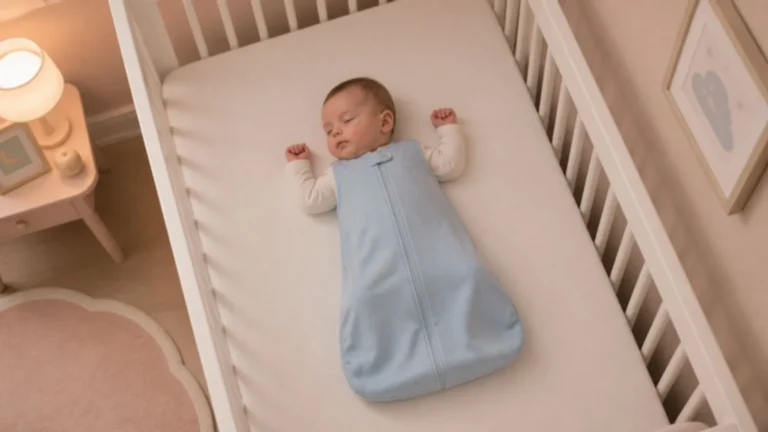
- On their back: place your baby on their back to sleep, feet at the bottom of the cot.
- Firm, flat surface: a firm mattress, with no pillows, duvets, bumpers, soft toys, “nests” or “pods”.
- In your room: for at least the first 6 months, in a separate cot or Moses basket in the same room as you, day and night.
- Not on a sofa or armchair: do not fall asleep with your baby on a sofa or in an armchair.
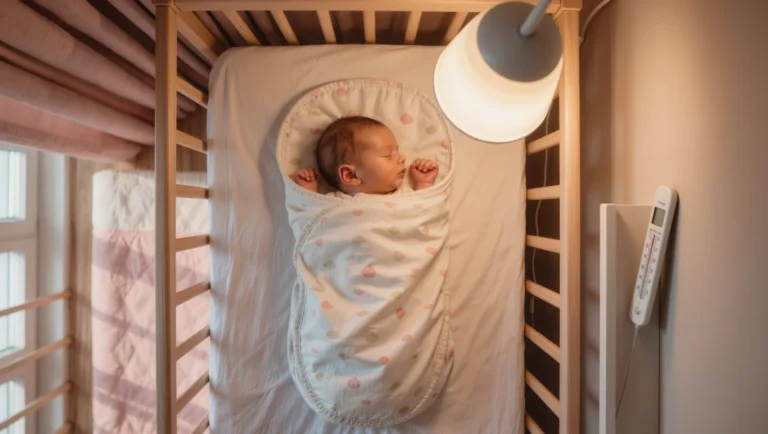
- Do not overheat: keep the room at about 16 to 20°C; feel the chest or back of the neck, and know that cool hands and feet are normal.
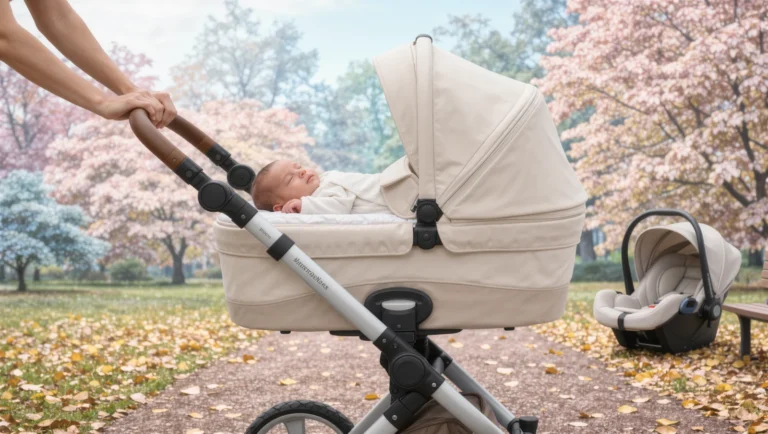
- Car seat: it is ok if your baby dozes off while travelling, but take them out as soon as you arrive.
You will find more in our guide Safe sleep: rules that lower the risk of SIDS, and for total hours see How much does a baby sleep by month: guidelines without stress.
The house does not have to go silent for every nap. A little background noise helps a baby not wake at every clink of a plate. And if you need rest too, the NHS suggests trying to sleep when your baby sleeps. 💛
For dads
Daytime naps are a perfect moment to swap. You take the baby, mum lies down and sleeps, even for just 20 minutes. If the baby naps on your chest, take care not to doze off on a sofa or armchair: it is safer to lay them in their own cot.
When should you ask the pediatrician?
Ask the pediatrician if something about your baby’s sleep worries you, if it is very different from their usual, or if your baby seems unwell. You know your baby best, and your feeling is reason enough to ask. If your baby has trouble breathing or is unresponsive, seek medical help immediately.
In short
Naps are not an exam but a rhythm that is learned over time. The numbers are a map, not a verdict, and safe sleep applies to the twenty-minute nap too. It gets easier day by day, and you are already doing better than you think. 💛
Sources: NHS – Your baby's sleep patterns; NHS – Helping your baby to sleep; NHS – Sudden infant death syndrome (SIDS); Sleep Foundation – How Much Sleep Do Babies Need?.