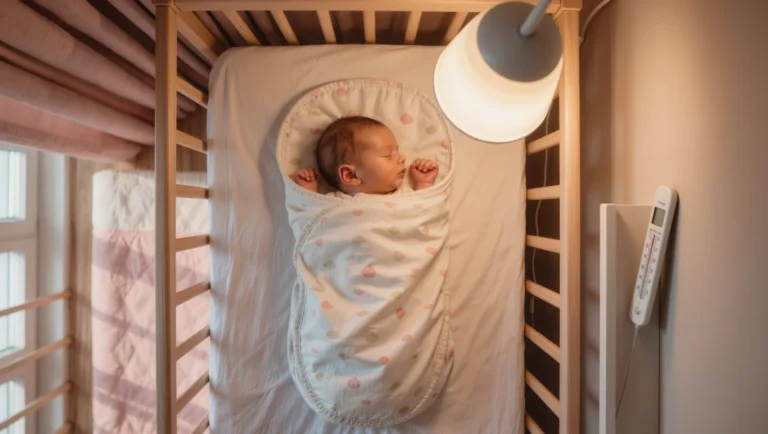


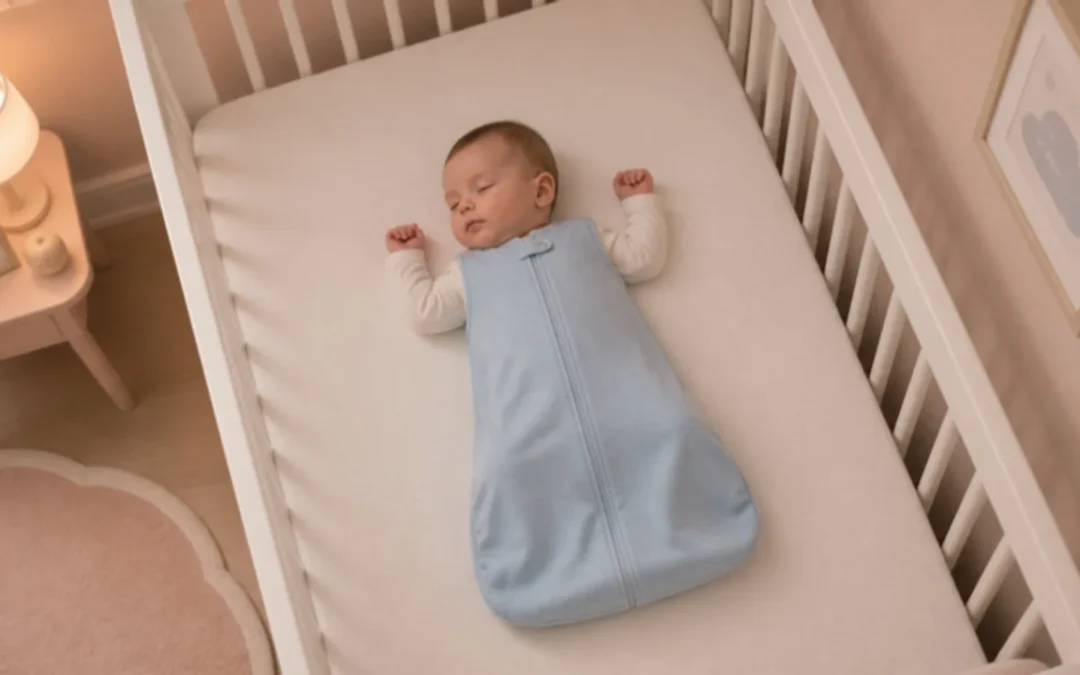
No – official guidance does not recommend letting your baby sleep in a baby nest (also called a sleep pod or lounger). The NHS (the UK’s health service) specifically says to keep the cot free of anything that keeps your baby in place, like pods or nests, and to use a firm, flat mattress with just a fitted sheet. A nest is for supervised awake time. 🌿
You’ve seen them everywhere: soft, beautifully stitched, with a baby snoozing inside like on a little cloud in every other photo online. Maybe someone gave you one, or it’s sitting in your online basket right now. And now you’re wondering if you’ve made a mistake.
Don’t worry, you haven’t. Liking something lovely for your baby is never a mistake. Let’s just sort out when a nest is great and when it’s better left to one side.
Why isn’t a baby nest recommended for sleep?
Because for sleep, official guidance asks for a surface that is firm, flat and clear. A nest is soft, has a padded rim around the baby and is designed to hold them in place. Those are exactly the things the NHS advises keeping out of the sleep space: pillows, bumpers, duvets and anything that keeps your baby in place, such as pods and nests.
The US Safe to Sleep campaign (run by the NICHD, the US national institute for child health) explains the three key words very simply:
- Firm: it quickly springs back to shape when you press on it.
- Flat: like a table, not a hammock.
- Level: no angle or incline, covered only with a fitted sheet.
The AAP (American Academy of Pediatrics) adds that a firm surface shouldn’t indent when your baby lies on it, and that any surface inclined more than 10 degrees isn’t safe for sleep. Soft things near the face can get in the way of fresh airflow if a baby turns towards them.
Baby nest or cot: what’s the difference?
Cots, bassinets and Moses baskets are made for sleep: a firm mattress, a flat base and nothing soft around the face. A nest is made for cosiness and short spells close to you while your baby is awake. The difference isn’t price or prettiness – it’s what each one is designed for.
| Baby nest | Cot / bassinet | |
|---|---|---|
| Surface | soft, padded rim | firm, flat mattress |
| Night sleep and naps | not recommended | yes |
| Supervised awake time | yes | yes |
| What’s inside | padding around the baby | just a fitted sheet |
In the US, the AAP notes that nests, pods and other alternative sleep surfaces are only considered a safe option if they meet the federal safety standards for cribs, bassinets, portable cribs or play yards. If a product doesn’t, the AAP says not to use it for sleep. Most soft nests don’t fall into that category.
Read alsoCan a baby sleep in a car seat? When to move themBaby daytime naps: stress-free and safe
Try the “palm test”: press down on the cot mattress. If it springs straight back with no dent left behind, that’s the surface you want for sleep. A nest usually sinks. You’ll feel the difference instantly. 😊
How can you use a baby nest safely while your baby is awake?
A nest can be a cosy spot for cuddles, play and people-watching when your baby is awake and you’re right there. Put it on the floor on a flat surface – not on a table or sofa – and don’t leave your baby alone in it. As soon as they fall asleep, move them onto their back in the cot.
- On the floor: place the nest on a flat, stable surface, away from the edge of a bed or sofa.
- In sight: use it only when you’re next to your baby and can see them.
- No extras: no pillows, blankets or soft toys inside.
- Dozed off? Move them onto their back in the cot or bassinet. If they wake up – that’s okay, you’ll settle them again.
The same goes for the other places babies love to nod off. The AAP advises that if your baby falls asleep in a car seat, pram, swing, carrier or sling, you should move them onto their back on a firm sleep surface as soon as possible. Our guide Safe Sleep: Simple Rules That Lower the Risk of SIDS has the full picture.
If your baby only drops off when snuggled, try warming the cot sheet with your hand before you lay them down, then keep a hand on their chest for a few seconds. A small bit of magic that sometimes buys you a whole nap. And if they’ll only sleep in your arms – have a look at Baby only sleeps when held: how to transfer them to the cot. 🎁
What about nests and positioners sold as “safe for sleep”?
Be wary of products that promise to lower the risk of SIDS (sudden infant death syndrome). The AAP says plainly that there’s no evidence they do, and advises avoiding baby products that aren’t consistent with safe sleep recommendations. Safe to Sleep also lists positioners among the things that shouldn’t be in the sleep area.
That doesn’t mean you got it “wrong” if you already own a nest. It just means it has its place during the day, and night-time belongs to the cot.
What does a safe sleep space actually need?
Surprisingly little. The NHS recommends placing your baby on their back, feet to the foot of the cot, in a separate cot or Moses basket in your room for at least the first 6 months, on a firm, flat mattress. The room should be about 16 to 20°C. No pillows, bumpers or soft toys. If you’re choosing a cot, see Cot and mattress: how to choose safely.
If an empty cot looks a bit chilly to you, a lightweight sleeping bag is your friend. Our whole Baby Sleep section is full of ideas for calmer nights.
For dads
The nest is your ally for the afternoon “floor shift”: your baby lies awake beside you, you tell them all about the match, they stare at you with enormous eyes. Your job is simple – the moment their eyelids get heavy, you’re the one who carries them to the cot and lays them on their back. Twenty seconds for you, a lot of peace of mind for the whole house.
When should you ask your paediatrician?
If your baby only seems to sleep well when propped up or curled, or you’re worried about frequent spitting up, talk it through with your paediatrician. The AAP notes that even babies with reflux should sleep flat on their backs, but what’s right for your baby is for the doctor who knows them to decide. Talk to your paediatrician before you change anything about your baby’s sleep for medical reasons.
In short
A baby nest is like the favourite armchair in the living room: perfect for awake cuddles while you’re watching, but not for sleeping. For sleep, your baby needs a boring, firm, empty cot. And if you’ve read this far, you’re already doing exactly the right thing. 💛
Sources: NHS – Sudden infant death syndrome (SIDS); AAP / HealthyChildren.org – How to Keep Your Sleeping Baby Safe: AAP Policy Explained; NICHD Safe to Sleep – Ways to Reduce Baby's Risk.