This guide may contain affiliate links. If you buy through them, we may earn a small commission at no extra cost to you. Learn more
Let’s be honest: phones and TVs are everywhere around us. And one cartoon put on so you can get lunch cooked is not proof that something’s wrong with your parenting. This article isn’t about guilt. It’s about what the guidelines actually say – and how to fit them into real life.
Every family has its own circumstances. The goal isn’t perfection, it’s direction.
What does the World Health Organization say?
In 2019 the WHO published its first guidelines on physical activity, sitting and sleep for children under 5. On screens, they say:
- Under 1 year: screen time is not recommended.
- At 1 year: passive viewing is not recommended either.
- From 2 to 4 years: no more than 1 hour a day – and less is better.
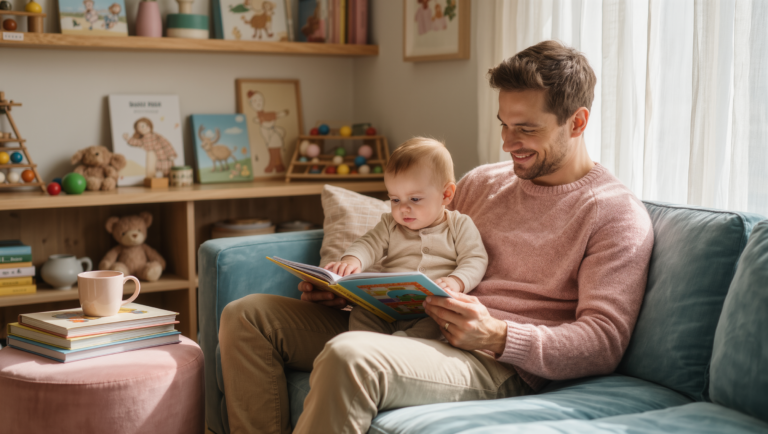
By “screen time”, the WHO means passively watching a TV, phone or tablet. Instead, when a child is sitting, it encourages reading, storytelling, singing and puzzles together with an adult.
And the American Academy of Pediatrics?
The AAP’s guidelines are very similar, but with a few useful clarifications:
- Under 18 months: no screens, except for video calls. Chatting with Grandma on video is a different thing – there’s a real person responding.
- 18–24 months: if you decide to introduce screens, choose high-quality content and watch it together.
- 2–5 years: up to 1 hour a day of high-quality programmes, ideally with an adult alongside to help your child understand what they’re seeing.
“Watching together” doesn’t mean sitting still. Just chatting is enough: “Look, the dog’s looking for the ball. Where could it be?” That way the screen becomes a conversation starter, not a monologue.
Why so much emphasis on the little ones?
In the first years, babies learn best through live interaction, movement and play with real objects. A screen can’t respond to them the way you can – waiting for their sound, following their gaze. That’s why the WHO sums up its message in a few words: “sit less, play more”.
And an honest note: some experts – the UK’s Royal College of Paediatrics and Child Health, for example – consider the evidence too limited to set exact limits in minutes, and put more emphasis on content and context. The takeaway for you: the numbers are a guide, not a stopwatch. What your child watches, and who with, matters at least as much as how much.
Practical, drama-free ideas
- Screen-free zones. For example, the table at mealtimes and the bedroom.
- An “instead of a screen” box. A few books, play dough, blocks – for the moments when you need ten free minutes.
- Short and predictable. One specific episode with a clear ending is easier to switch off than an endless stream of clips.
- Simple content. A slow pace, little noise and a story your child can follow.
- A family plan. The AAP offers a free Family Media Plan tool to help families set their own rules.
Give a heads-up before the end: “One more episode and then we’re off to water the plants.” When something nice comes after the screen, the switch usually happens with fewer tears. 🌱
For the dads
Children copy our habits, not our words. If after work you leave your phone in another room for half an hour of wild play on the floor, that’s one of the strongest examples you can set. Plus: no notification will ever be that much fun.
When to ask for advice
If screens have become the only way your child calms down, eats or falls asleep, or if you have questions about their speech and attention, talk to your paediatrician. It’s a normal everyday question, and together you can find steps that suit your family.
In short
You don’t need to throw the TV out of the window. It’s enough for screens to be a guest, not the host. Every book you read together and every game on the floor counts. You’re already on the right track – and you’re not walking it alone. 💛
Sources: WHO – To grow up healthy, children need to sit less and play more; American Academy of Pediatrics – New recommendations for children’s media use (Media and Young Minds), ScienceDaily; American Academy of Pediatrics (HealthyChildren.org) – Best Toys Go Back To The Basics.
More from this section


Your baby, week by week
Once a week: what's coming up, one useful tip and nothing extra.