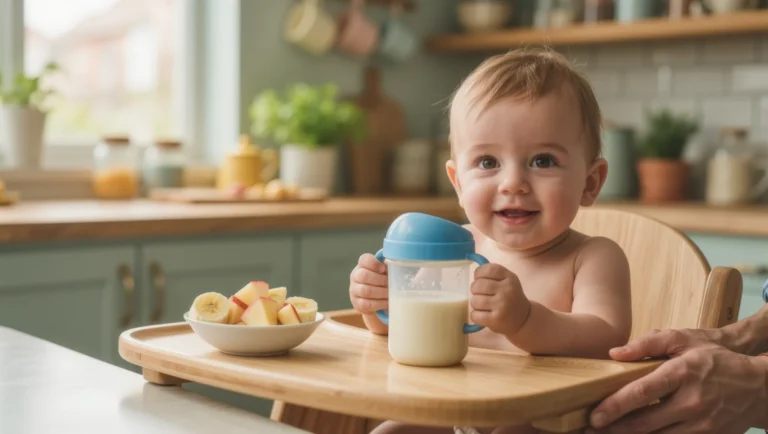


You’re next to the high chair, your baby has just pushed a piece of banana into their mouth, and suddenly there’s coughing and watery eyes. You’ve forgotten to breathe. 😅
If weaning makes you clench your jaw at every bite, that’s completely understandable. Most parents go through it. The good news is that a few simple habits lower the risk considerably.
When is a baby ready for solid food?
According to the NHS (the UK health service), weaning starts at around 6 months. It lists three signs that appear together:
- Sits upright and holds their head steady.
- Coordinates eyes, hands and mouth: looks at the food, picks it up and puts it in their mouth.
- Swallows food rather than pushing it back out.
Chewing fists and waking more at night are normal baby behaviour and don’t on their own mean it’s time for solids.
Gagging or choking: is there a difference?
Yes, and it matters. The NHS explains that babies may gag when they start solids because they’re learning how much food to chew and swallow at once. Their eyes may water, their tongue may push forward, and they may retch to bring the food to the front of the mouth. That’s part of learning.
Choking is different. If you think your baby can’t breathe because of food, get emergency help straight away (112 in Europe). It’s worth reading the official first-aid information for babies, or taking a short course, before you need it.
Read alsoBaby-Led Weaning or Purées: Facts From Both SidesAllergens and Weaning: Peanuts, Eggs and Early Introduction
How can you make food safer?
- Seated and upright: your baby eats in a high chair, in a stable upright position, so they can swallow properly.
- Always nearby: the NHS advises staying with your baby while they eat, in case they start to choke.
- Small round foods in quarters: grapes and cherry tomatoes are cut into 4 small pieces.
- Hard foods with care: the NHS suggests avoiding hard foods like whole nuts, raw carrot or apple. You can cook them until soft.
- Pips, stones and bones are removed from fruit, meat and fish first.
Before you serve a piece, press it between your thumb and finger. If it squashes easily, it should be soft enough for your baby’s gums. If not, give it a few more minutes in the pan. 😊
Nuts and peanut butter: allowed?
The NHS says whole nuts shouldn’t be given to children under 5 because they can choke on them. Crushed or ground nuts can be added to food from the start of weaning. Nut butter works the same way: spread it thinly on toast or another food rather than giving it on its own, as your child could choke on it. If allergies run in your family, talk to your GP or health visitor first. There’s more in our guide to allergens in weaning.
For dads
“The person next to the high chair” is a role made for dad. He can cut food, sit at baby’s level and keep watch while mum finally eats a warm dinner. And when grandparents visit, share the food-shape rules before they treat the grandchild to nuts.
When should you ask the paediatrician?
If your baby often chokes or coughs during meals, struggles to swallow, or avoids anything that isn’t smooth, tell your paediatrician or health visitor. They know your baby and will guide you. If you think your baby can’t breathe, don’t wait: call 112.
In short
Safe weaning is like a secure car seat: a little preparation up front and calm on the road. An upright baby, suitable shapes and a parent nearby are all it takes. You’re doing better than you think. 💛
Read more: Starting solids: when and how, BLW or purées and everything in Feeding.
Sources: NHS – Your baby's first solid foods; NHS – Foods to avoid giving babies and young children.