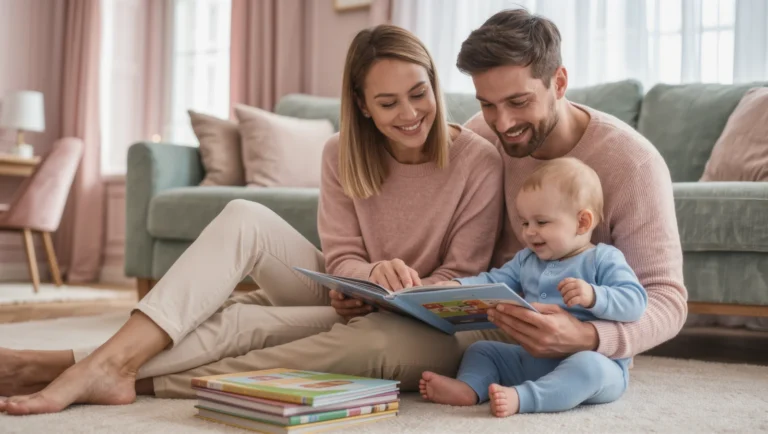


Yes, you can share photos of your baby, but it’s calmer to share them with a small circle of people you know. Hide the location and don’t post anything you wouldn’t hand to a stranger on the street. According to the AAP (American Academy of Pediatrics), there’s no single right answer. It’s your family’s call.
Your baby smiles straight at the camera for the very first time. The photo is perfect, your thumb is already hovering over “Share”, and then a little voice in your head pipes up: “But what if…?” 😅
If you’re hesitating, that’s completely understandable. Wanting to show off your joy is normal and lovely. Pausing to think first is even better. No need to panic: a few simple habits let you share and still feel at ease.
Is it safe to post pictures of my baby online?
No online sharing is completely safe, but the risk depends mostly on who sees the photo and what’s in it. The AAP notes that sharing with family and friends, especially those far away, is a real joy. Public posts, however, can lead to unwanted contact from strangers.
UNICEF and Ireland’s Data Protection Commission (DPC, the European authority that oversees how personal data is protected) say the same thing: sharing is never 100% safe, so the question is how to lower the risk, not how to give up the joy.
Pediatrician Dr Claire McCarthy makes two key points on the AAP’s site healthychildren.org. First, nothing online is completely private and everything is permanent. Even with strict settings, someone can take a screenshot. Second, this information really belongs to your child, not to you.
What shouldn’t show in your baby’s photos?
Above all, the photo shouldn’t reveal where you live or who your child is, or show them in a moment they wouldn’t want public years from now. The DPC’s simple rule helps: if you wouldn’t hand a printed copy to a stranger on the street, don’t post it.
- Location: turn off geotagging and don’t tag the place. Check the background too: house number, street sign, a landmark near your home.
- Name and details: full name, exact time of birth or the hospital’s name don’t need to be in the caption.
- Nude or half-dressed photos: UNICEF advises against posting pictures of children in any state of undress, even the most innocent bath or beach shots.
- Embarrassing moments: tears, awkward faces, “disasters”. Funny today, but at 12 your child may see it differently.
- Health details: the DPC suggests thinking carefully before sharing information about your child’s health with a wide audience.
An emoji over the face looks like a fix, but the DPC warns it can give a false sense of security. If the caption has the name and the location is tagged, the emoji doesn’t do much. Safer bets: a shot from behind, tiny hands, a foot in a little sock. They’re often the cutest anyway. 🧦
Read alsoMaternity leave in Bulgaria: rights and benefits in briefBaby blues or postnatal depression: how to tell the difference
How can I share baby photos more safely?
The easiest way is a private family chat or sharing only with a chosen circle. If you do post on social media, set your profile to “Private”, review who follows you and remove details that could identify your baby. Here are the steps suggested by the DPC and UNICEF:
- Choose where: a secure messaging app or closed group instead of a public profile.
- Limit your audience: a private profile or a “Close friends” list.
- Review your followers: ask yourself “Would I show this person a photo of my child?” If not, remove them.
- Turn off geolocation and check the background.
- Keep the caption short, with no name, place or extra details.
- Review old posts now and then and delete anything you no longer feel good about.
Public profile, private profile or family chat?
The smaller and more familiar the audience, the lower the risk. A family chat is the closest thing to “a printed photo in Grandma’s wallet”. A public profile is more like a billboard on the main road.
| Where | Who sees it | Good for |
|---|---|---|
| Family chat or group | Only invited people | Everyday photos for grandparents and relatives far away |
| Private profile / “Close friends” | People you’ve approved | Big moments: first steps, birthdays |
| Public profile | Anyone, including strangers | Best without your baby’s face, name or location |
How do I ask family not to post photos of my baby?
Say it openly and calmly, ideally before the first photo, and explain why. UNICEF points out that sharing children’s photos online is fairly new and not everyone has thought about it. So more conversation, not less, helps your wishes be respected.
One sentence works wonders: “Send them to us, we love them, but let’s keep them off public pages. We decide for our little one until they’re old enough to.” If it’s a sensitive subject in your family, see Grandparents: how to set boundaries with love. And if visits are coming up, Visitors and a newborn: when and how to welcome them calmly can help too.
For nursery, daycare or clubs: UNICEF suggests asking whether they have a social media policy for photos. If not, you could offer to help create one. Other parents will probably thank you.
Create a shared album (in the cloud or in your chat) just for your closest people and tell everyone that’s where the “official” photos live. Grandparents get their daily baby fix and you get peace of mind. 🎁
I’ve already posted a lot. What now?
First, take a deep breath. That’s exactly what UNICEF says: most parents share out of love, not bad intentions. A good first step is to look back at old posts and delete what you can. On some platforms you can request that a photo be removed if you can’t do it yourself.
Once your child is old enough to understand, ask them. The DPC and the AAP suggest deciding about sharing together with your child. Until then, imagine: “Will they be glad to see this at 14?”
For dads
Sit down together for five minutes and agree on the rules: where you share, who sees it and what you never post. Then you take on the conversation with your side of the family and your friends. That way Mum isn’t “the strict one” – you’re a team with a shared decision.
In short
Baby photos are love, and there’s nothing wrong with that. Share them like a letter, not a poster: with a small circle, no address and nothing your child wouldn’t want to see years from now. You’re keeping their story safe until they’re old enough to tell it themselves. And you’re doing a wonderful job. 💛
Sources: AAP – Sharing Photos and Videos of Children on Social Media ("Sharenting"); HealthyChildren.org (AAP) – Sharenting: 5 Questions to Ask Before You Post; UNICEF – What you need to know about sharing photos or videos of your child online; Data Protection Commission (Ireland) – Sharenting: Top Tips.