

Babies aged 6 to 17 months rarely see the clear, ‘textbook’ facial expressions of emotion that scientists often use in lab studies. That’s the finding of a University of Kansas study in the journal Communications Psychology, highlighted on 17 November 2026. 😊
What did the researchers find?
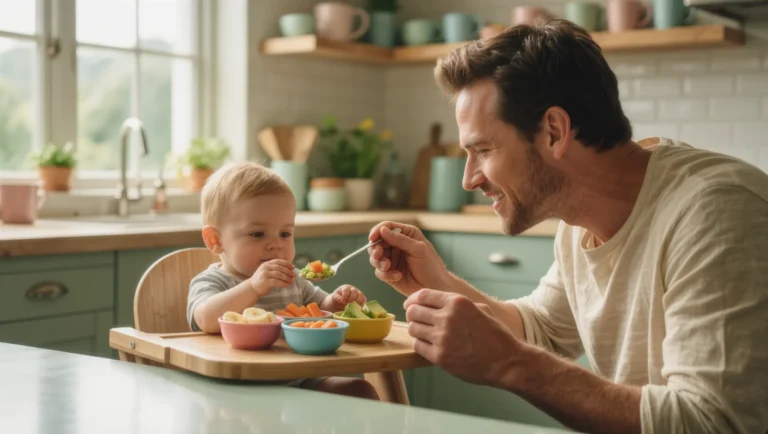
The team analysed existing home video recordings – about an hour each month – of babies aged 6 to 17 months interacting with people close to them. Babies saw partial faces far more often than full faces. Even when a full face was visible, the ‘typical’ emotion expressions (like a big smile for joy or a frown for anger) appeared only about 12% of the time, according to the university’s press release.
‘Happiness was relatively the most common,’ says lead author Katie Hoemann. The researchers also noticed that the same facial movement could mean different things in different situations.
What does this mean for parents?
According to the authors, babies learn emotions not only from faces but from the whole picture: words, voice, gestures, movement and touch. In other words, there’s no need to pull exaggerated mime faces. Your ordinary, genuine way of connecting is already a rich lesson. You’re doing just fine. 💛
Read alsoBaby poo colours: what’s normal and when to call the doctorWhen can babies drink cow’s milk? Calm, clear guidance
What are the limitations?
This is a descriptive study of recordings from one existing dataset. It shows what babies see at home, but it doesn’t directly measure how they understand emotions. The authors themselves say more research is needed that looks beyond faces alone.
What can you do?
Simply keep talking to your baby and naming what’s happening: ‘You’re laughing because the kitty tickled you.’ Your voice, your cuddles and your words all travel together with your face. Curious how the social smile develops? See our guide https://babyvita.eu/when-do-babies-start-smiling-your-babys-first-real-smile/.
More on play and development: Development & Play.
Source: University of Kansas / Communications Psychology, 17.11.2026
This news item is for information only and does not replace medical advice. For questions about your health or your baby’s health, please speak to your paediatrician, midwife, obstetrician or GP.