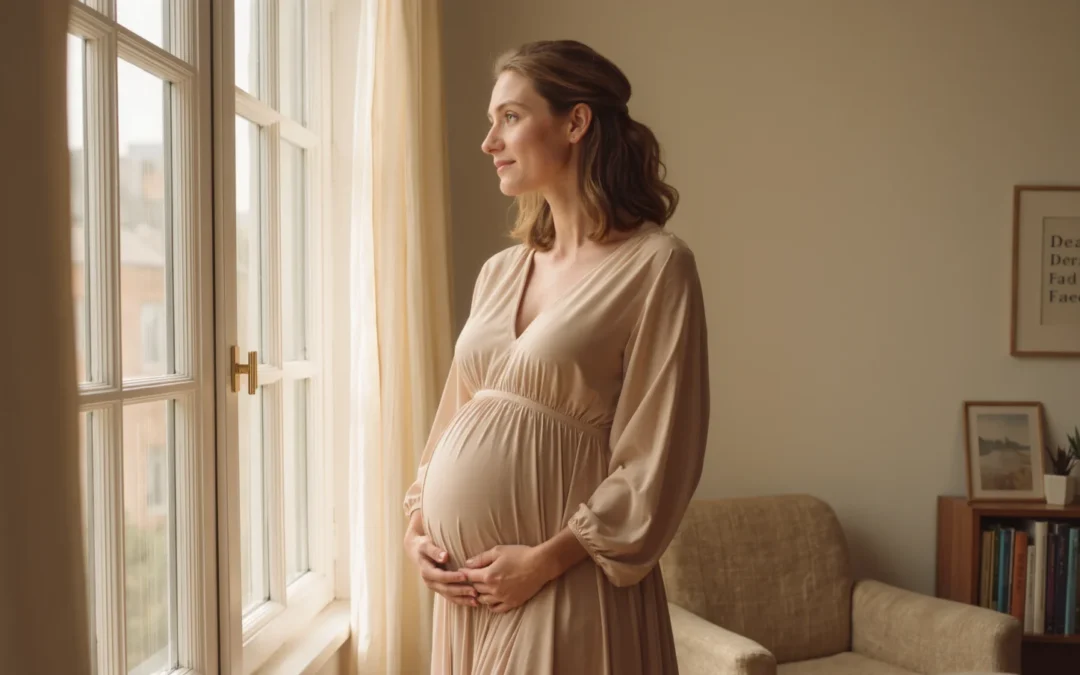
Nine months sounds like a long time – until you’re in the middle of it. Then one week crawls by, and whole months disappear without you noticing. Some days you feel fantastic, others like you’ve just run a marathon.
The easiest way to think about pregnancy is in three chapters – trimesters. Each has its own challenges and its own little miracles. And you’re certainly not the first to go through them with excitement and questions.
The short answer: Pregnancy lasts about 40 weeks, counted from your last period. First trimester, up to about week 13: main organs start to develop, with tiredness and nausea common. Second, weeks 14–27: energy often returns and first movements are felt. Third, from week 28: your baby builds fat and lungs mature.
How are the weeks counted?
Pregnancy lasts about 40 weeks, counted from the first day of your last period, not from conception. That’s why you can find yourself “4 weeks pregnant” just after you’ve found out. Each trimester is roughly 13 weeks.
First trimester (up to about week 13)
Your baby: this is the time of the big foundations. According to the Cleveland Clinic, by the end of week 8 all the main organs and systems have started to develop. The heart starts beating very early, and the neural tube – the future brain and spinal cord – forms in the first weeks.
You: you may feel very tired, nauseous, have tender breasts, need the loo more often and have mood swings. Nothing shows on the outside, but your body is working at full speed.
Resting in the first trimester isn’t laziness, it’s construction work. If you feel sleepy at nine in the evening – go to bed with a clear conscience. Your body is building a human right now. 😴
Second trimester (about weeks 14–27)
Your baby: grows fast and starts moving actively. Fingerprints form. Around week 20 you’re halfway there.
You: for many women, nausea eases and energy returns. Your bump becomes visible. And one of the most exciting moments arrives – the first movements. Many women feel them around weeks 18–20 as a gentle fluttering or “bubbles”. In a first pregnancy they often come a little later – and that’s normal.
Third trimester (from about week 28 until birth)
Your baby: builds up fat and gets ready for life outside. The lungs mature – they start producing surfactant, a substance that will help your baby breathe after birth. By around week 36 most babies are head down. According to the Cleveland Clinic, a baby is considered full term from week 39.
You: your bump is now really big, and you can feel it. Common companions are back pain, heartburn, needing to wee often, restless sleep and “practice” contractions – irregular tightenings of the womb. After week 28 the NHS advises going to sleep on your side.
When to call your doctor outside your scheduled visits
In any trimester, contact your doctor if you have bleeding, severe tummy pain, leaking fluid, a fever, a bad headache with vision problems, or sudden swelling of your face and hands. In the second half of pregnancy – also if your baby is moving less than usual. Don’t wait until the next day – getting checked is for your peace of mind.
Take a photo of your bump every month, in the same spot. It might feel silly now, but later those photos become treasures. 📸
For the dads
The movements in the second trimester are your chance too. Put your hand on the bump in the evening, when the baby is often most active, and talk to them. Soon they’ll recognise your voice.
In short
Every trimester has its own pace – and you’re entitled to yours. Don’t compare yourself with other people’s photos and stories. Step by step, week by week, you’re already on your way to the meeting you’re more ready for than you think. 💛
Sources: Cleveland Clinic – Fetal development: week-by-week stages of pregnancy; NHS Best Start in Life – Week-by-week guide to pregnancy; Mayo Clinic – Fetal development: the 3rd trimester.
More from this section



Your baby, week by week
Once a week: what's coming up, one useful tip and nothing extra.